All Categories
- ATEN
- EPSON
- HISENSE
-
AV Signal Distribution
In AV Signal Distribution
- JK
-
Screens
In Screens
-
Projector
-
Cables
In Cables
- DTECH
- Business
- VISION
-
Projector Bracket
In Projector Bracket
-
Digital Signage Solutions
In Digital Signage Solutions
Brands
-
Audio
In Audio






All Categories
- ATEN
- EPSON
- HISENSE
-
AV Signal Distribution
In AV Signal Distribution
- JK
-
Screens
In Screens
-
Projector
-
Cables
In Cables
- DTECH
- Business
- VISION
-
Projector Bracket
In Projector Bracket
-
Digital Signage Solutions
In Digital Signage Solutions
Brands
-
Audio
In Audio

BROWSE CATEGORIES
Help
JK
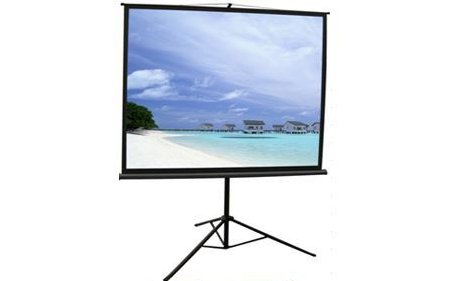
JK Tripod Screen, 96″, 1:1 Aspect Ratio, Matt White Fabric – T196
R4,040.40
JK's bigger square tripod screen, 96" along each side and about 136" across the diagonal, for halls tall enough to take a 2.44 m high picture.
- 2440 x 2440 mm matt white viewing area
- Case 2610 mm long; 18 kg packed
- Same 2440 mm width as the 120" 4:3 JK-T4 120
- Keystone eliminator tilts the screen forward
- Brand :JK
- SKU :JK-T196
- Category :JK
- Availability :Out of Stock
Out of stock
The JK-T1 96 (our code T196) has a square matt white surface of 2440 x 2440 mm. JK counts its 96 inches along one side, as it does for the smaller square JK-T1 84, so the diagonal is about 136″ (345 cm). Height is what limits it: the white area alone is 2.44 m tall, and with the tripod under it this is a screen for halls and churches with high ceilings.
JK-T1 96 or the 120 inch 4:3 JK-T4 120
The two are the same width, 2440 mm, pack into the same 2610 mm case length, and JK lists each at 18 kg gross. The JK-T4 120 stops at 1830 mm high, where the square model continues to 2440 mm. A 4:3 projector filling the width draws the same 2440 x 1830 mm, 120″ picture on either screen, so the square’s extra 610 mm is used only by an overhead projector’s square image, or when you want room to move a picture up or down the fabric. The cartons differ slightly: 2720 x 245 x 175 mm for this screen, 2725 x 216 x 165 mm for the 4:3 one.
Ceiling height for a 2.44 m tall surface
JK gives the screen a total height of 2670 mm, which is the screen alone, 230 mm more than the white area. The tripod’s height comes below that and is not published. A room with a 2.7 m ceiling leaves 30 mm for the tripod. Under a 3 m ceiling, the lower edge of the white area can be no higher than 0.56 m from the floor; it takes a 3.5 m ceiling before that limit rises to 1.06 m.
Throw distance and widescreen pictures on the JK-T1 96
Using the 1.48 to 1.77 throw ratio Epson publishes for the XGA Epson EB-X49, the lens has to be between 3.61 and 4.32 m from the screen to span the 2440 mm width, and its 4:3 picture is then 1830 mm tall. A 16:10 projector at the same width gives 1525 mm (about 113″ diagonal) and a 16:9 one 1372 mm (about 110″), leaving 915 or 1068 mm of the square bare. With the projector low and aimed up, the keystone eliminator at the head of the tripod tips the screen forward to face the beam.
Key specifications of the JK-T1 96
| Model (JK) | JK-T1 96 (T196) |
|---|---|
| Aspect ratio | 1:1, named by side length |
| White viewing area | 2440 x 2440 mm |
| Diagonal, calculated | About 136″ (345 cm) |
| Fabric | Matt white |
| Case length | 2610 mm |
| Screen total height, without tripod | 2670 mm |
| Black drop | 60 mm |
| Tripod | Reinforced steel, anti-skid caps, safety lock button |
| Packed size | 2720 x 245 x 175 mm |
| Weight, packed | 18 kg |
Questions about the JK-T1 96
Does JK make a pull-down screen in this size?
Not a square one: JK’s square pull-downs stop at 70″, which is 1780 mm a side. For a fixed screen of the same width, the JK-M4 120 manual pull-down has a 2440 x 1830 mm 4:3 picture, the area a 4:3 projector covers on this tripod anyway.
Will a 4:3 picture look dimmer on the T196 than on the JK-T4 120?
Not at the same width. The projector lights the same 2440 x 1830 mm on both, both use JK’s matt white tripod fabric, and the unused strip of the square takes none of the light. Only a square source spreads its output over all 5.95 square metres.
Can the extra height lift a widescreen picture higher?
Yes, if you aim the projector at the top of the fabric. A 16:9 picture across the full width is 1372 mm tall, so at the top of the square instead of the bottom its lower edge sits 1068 mm higher. A low projector then points up more steeply, which is the distortion the keystone eliminator is there to correct.
Does a visualiser make better use of a square screen?
No. A visualiser’s image reaches the screen through the projector, so it arrives in the projector’s 4:3, 16:10 or 16:9 shape and leaves the same bare band as a laptop would. The overhead projector is the source that fills the whole 2440 x 2440 mm.
JK T1 96
| Diag. Size (inch) | 96” |
|---|---|
| Viewing area W x H (mm) | 2440 x 2440 |
| Case Length (mm) | 2610 |
| Total Height (mm) | 2670 |
| Black Drop (mm) | 60 |
| Packing Size (mm) LxWxH | 2720 x 245 x 175 |
| Gross Weight (kg) | 18 |
You must be logged in to post a review.
You may also like these
JK
 Low stock (2 left)
JK Fixed Thin Frame Screen, 106", 16:9 Aspect Ratio, Matt Grey Fabric - F9106TFG
R14,158.80
F9106TFG Low stock (2 left)
JK
JK Fast Fold Screen, 250", 16:10 Aspect Ratio, Front & Rear Fabric - FF10250FPRP
R70,077.71
FF10250FPRP Out of Stock
JK
In Stock
JK Electric Screen, 150", 16:10 Aspect Ratio, Matt White Fabric - E10150
R10,617.80
E10150 In Stock


Hisense
Low stock (1 left)
Hisense Ambient Light Rejection Frame Screen, 120", 16:9 Aspect Ratio - DLT120C
R23,160.91
DLT120C Low stock (1 left)
Reviews
There are no reviews yet.