All Categories
- ATEN
- EPSON
- HISENSE
-
AV Signal Distribution
In AV Signal Distribution
- JK
-
Screens
In Screens
-
Projector
-
Cables
In Cables
- DTECH
- Business
- VISION
-
Projector Bracket
In Projector Bracket
-
Digital Signage Solutions
In Digital Signage Solutions
Brands
-
Audio
In Audio














All Categories
- ATEN
- EPSON
- HISENSE
-
AV Signal Distribution
In AV Signal Distribution
- JK
-
Screens
In Screens
-
Projector
-
Cables
In Cables
- DTECH
- Business
- VISION
-
Projector Bracket
In Projector Bracket
-
Digital Signage Solutions
In Digital Signage Solutions
Brands
-
Audio
In Audio

BROWSE CATEGORIES
Help
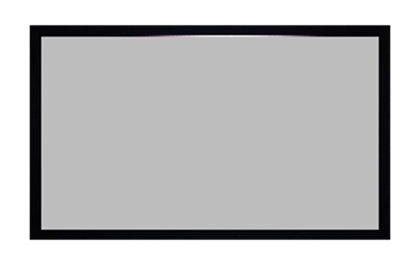
Fixed Frame
JK Fixed Frame Screen, 133″, 16:9 Aspect Ratio, Matt Grey Fabric – F9133G
R9,202.26
JK's High Contrast Grey version of the 133" (338 cm) 16:9 fixed frame, for dim rooms with pale walls and a projector with lumens to spare.
- 2,950 x 1,655 mm picture, same as the white F9133
- 8 cm black velvet frame, 3,110 x 1,815 mm overall
- Returns less light than white; allow extra lumens
- 26 kg gross
- Brand :JK
- SKU :JK-F9133G
- Category :Fixed Frame
- Availability :Out of Stock
Out of stock
The JK F9133G is the 133″ (338 cm) 16:9 velvet frame screen with JK’s High Contrast Grey fabric in place of matt white. Picture (2,950 x 1,655 mm), border (8 cm black velvet) and frame size (3,110 x 1,815 mm) match the white F9133. The grey trades some brightness for deeper blacks, and at 133″ a 4,100-lumen projector has enough output to pay for that trade in a dim room.
What grey fabric changes, and what it does not
A grey surface reflects a smaller share of all the light that reaches it. Projected whites come back dimmer, and so does projector light that bounces off pale walls, ceilings and furniture and lands back on the screen. Blacks look deeper as a result, as long as the projector has enough output to keep whites bright.
JK calls the fabric High Contrast Grey and makes no ambient light rejection claim for it. A matt grey surface dims daylight and downlights on the screen by the same share as the picture, so it does not stop windows washing an image out. Where light falls straight on the screen, compare our ambient light rejecting screens.
Projector brightness for the grey F9133G
With no published gain for this grey, the firm figure is a ceiling: what a projector gives on white at gain 1.0 over the 4.88 m² (52.6 sq ft) picture, after the 20% that screen maker Draper advises taking off rated lumens. On that basis the Epson EB-FH54‘s 4,100 lumens reach about 62 fL. Against the 16 fL SMPTE reference for a dark cinema, that leaves a wide margin for what the grey absorbs; against the 50 fL Elite Screens suggests with some room light, the margin is thin.
Seating and throw for a 2.95 m wide picture
For film, Epson suggests sitting about 1.5 to 2.5 screen widths away, roughly 4.4 to 7.4 m here; for presentations its 4/6/8 rule puts the farthest seat within six picture heights, about 9.9 m. The EB-FH54’s 1.30 to 2.09:1 throw ratio places its lens about 3.8 m (zoom wide) to 6.2 m (zoom tele) from the screen, within those seating distances, so plan to hang it above the audience with one of our projector ceiling brackets.
Key specifications of the JK F9133G
| Fabric | High Contrast Grey (matt grey) |
|---|---|
| Diagonal size | 133″ (338 cm) |
| Image area | 2,950 x 1,655 mm |
| Aspect | 16:9 |
| Frame outer size | 3,110 x 1,815 mm |
| Frame border | 8 cm, black velvet |
| Box length x width x height | 3,270 x 180 x 145 mm |
| Gain | Not stated by JK |
| Model codes | F9133G (JK-F9 133G) |
| Gross weight | 26 kg |
Questions about the JK F9133G
What is the gain of JK’s High Contrast Grey fabric?
JK does not publish a gain figure for it, or a viewing angle in degrees. Grey surfaces reflect less light than white ones, so expect less than the gain 1.0 figures above and choose the projector with that margin in mind.
Is the F9133G the same size as the white F9133?
Yes. JK’s datasheet gives both a 2,950 x 1,655 mm picture, a 3,110 x 1,815 mm frame, a 3,270 mm carton and 26 kg gross; only the fabric differs. Either one is built at the wall, and the sheet lists no brackets for them, so confirm the fixings in the carton first. The white JK F9133 is the safer choice where the lights stay up.
Is High Contrast Grey made in 16:10?
Not in this range. JK’s current datasheet lists High Contrast Grey only in 16:9 sizes, from 92″ up to 173″; its 16:10 velvet frame screens come with matt white fabric.
Does grey suit a home cinema with dark walls?
Usually not. With dark walls, ceiling and furnishings, very little projector light bounces back onto the screen, so grey mainly dims the picture, and Draper recommends white surfaces for dark rooms. The exception is a projector too bright for the screen on white, where grey brings whites down to a comfortable level.
JK-F9 133
| Diag. Size (inch) | 133" |
|---|---|
| Viewing area W x H (mm) | 2950 x 1655 |
| Screen Length (mm) | 3110 |
| Screen Height (mm) | 1815 |
| Dimension L x W x H | 3270 x 180 x145 |
| Gross Weight (kg) (Frame + Fabric | 26 |
You must be logged in to post a review.
You may also like these
JK
 Low stock (1 left)
JK Electric HD Tab Screen, 119", 16:9 Aspect Ratio, Matt White Fabric - E9119HDT
R20,446.49
E9119HDT Low stock (1 left)
JK
JK Fixed Frame Screen, 119", 16:10 Aspect Ratio, Matt White Fabric - F10119
R9,401.25
F10119 Out of Stock
Hisense
Low stock (1 left)
Hisense Ambient Light Rejection Frame Screen, 120", 16:9 Aspect Ratio - DLT120C
R23,160.91
DLT120C Low stock (1 left)
JK
Low stock (1 left)
JK Fixed Thin Frame Screen, 150", 16:9 Aspect Ratio, Matt White Fabric - F9150TF
R13,791.77
F9150TF Low stock (1 left)
JK
In Stock
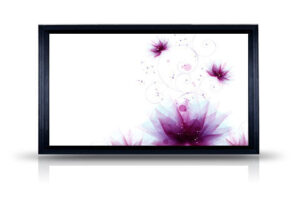
JK Fixed Frame Screen, 133", 16:9 Aspect Ratio, Matt White Fabric - F9133
R9,238.92
F9133 In Stock

JK
Reviews
There are no reviews yet.