All Categories
- ATEN
- EPSON
- HISENSE
-
AV Signal Distribution
In AV Signal Distribution
- JK
-
Screens
In Screens
-
Projector
-
Cables
In Cables
- DTECH
- Business
- VISION
-
Projector Bracket
In Projector Bracket
-
Digital Signage Solutions
In Digital Signage Solutions
Brands
-
Audio
In Audio














All Categories
- ATEN
- EPSON
- HISENSE
-
AV Signal Distribution
In AV Signal Distribution
- JK
-
Screens
In Screens
-
Projector
-
Cables
In Cables
- DTECH
- Business
- VISION
-
Projector Bracket
In Projector Bracket
-
Digital Signage Solutions
In Digital Signage Solutions
Brands
-
Audio
In Audio

BROWSE CATEGORIES
Help
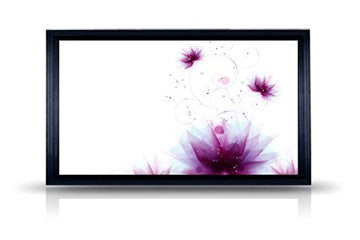
Fixed Frame
JK Fixed Frame Screen, 159″, 16:10 Aspect Ratio, Matt White Fabric – F10159
R13,902.51
A 159-inch matt white fixed frame screen in 16:10, the native shape of WUXGA (1920 x 1200) projectors, for lecture halls and training venues showing computer content.
- Picture 3,425 x 2,140 mm; outer frame 3,585 x 2,300 mm
- Largest 16:10 size in JK's velvet frame range
- Epson EB-L530U or EB-L890E: lens 4.62 to 7.54 m from the screen
- 40 kg gross; packed 3,745 mm long
- Brand :JK
- SKU :JK-F10159
- Category :Fixed Frame
- Availability :Out of Stock
Out of stock
At 159 inches (404 cm), the JK F10159 is the largest 16:10 screen JK lists with its 8 cm velvet frame. Its shape matches the 1920 x 1200 panel of a WUXGA projector, so the whole projected image lands on the fabric. The matt white picture measures 3,425 x 2,140 mm; add the border on each side and the frame is 3,585 x 2,300 mm.
16:10 against 16:9 at the same diagonal
At 159 inches the 16:10 shape trades width for height. Set beside the 16:9 JK F9159, this screen is 95 mm narrower and 160 mm taller. Its 2,140 mm picture height is within 10 mm of the 173-inch 16:9 JK F9173, yet its frame is 405 mm narrower, which helps where wall width is the limit.
How bright the projector needs to be
The picture area is 7.33 m² (78.9 sq ft). Draper, a screen maker, estimates brightness in foot-lamberts (fL) as gain times lumens divided by square feet, once at least 20% has come off the rated lumens. JK does not publish a gain, so take 1.0, which Draper gives as common for matt white. On that basis the 5,200 lumen Epson EB-L530U gives about 53 fL and the 8,000 lumen Epson EB-L890E about 81 fL. Both are WUXGA, so all of their light lands on this picture.
For a cinema in a darkened room Draper gives 12 to 16 fL, which either projector clears. Where the room lights stay up for note-taking, the EB-L890E leaves the bigger margin.
Weight, carton and assembly
Frame and fabric weigh 40 kg gross and travel in a 3,745 x 180 x 145 mm carton, nearly 3.75 m long, so plan the carry route through the building before the screen arrives. The screen goes together on site, with a tensioning system that keeps the fabric flat.
Key specifications of the F10159
| Aspect ratio | 16:10 |
|---|---|
| Diagonal | 159″ (404 cm) |
| Viewing area | 3,425 x 2,140 mm |
| Surface | Matt white |
| Frame outside size | 3,585 x 2,300 mm |
| Frame width and finish | 8 cm, black velvet |
| Gross weight | 40 kg |
| Gain | Not stated by JK |
| Packaging | 3,745 x 180 x 145 mm |
| JK model | JK-F10 159 |
Questions about the JK F10159
Do the EB-L530U and EB-L890E need different mounting distances?
No. Both have a 1.35 to 2.20 throw ratio, so across the 3.425 m picture width either one sits between about 4.62 m and 7.54 m from the screen, lens to fabric. Epson also gives both the same lens shift range, 50% vertically and 20% horizontally.
How close and how far can the audience sit?
Draper’s guidance works from picture height: the front row no closer than twice the height, the back row no further than six times for presentations, or four times where people read fine detail. For this 2,140 mm picture that is about 4.3 m to the front row and 12.8 m to the back, or 8.6 m for detailed work.
How much wall height does the F10159 need?
More than the 2,300 mm frame suggests. Draper notes that designers prefer the bottom of a commercial picture at least 1.22 m (48″) off the floor so later rows can see over earlier ones; at that height the top of this frame is at about 3.44 m. The width needed is 3,585 mm.
Will 16:9 video fill this screen?
No, it leaves bands above and below. Sized to the full 3,425 mm width, a 16:9 picture is 1,927 mm tall, so there is a strip of unused fabric about 107 mm deep above the picture and another below it. Computer images at 1920 x 1200 fill the whole surface.
What should the wall fixings be rated for?
At least the 40 kg gross weight, spread along the 3,585 mm frame and suited to the wall. JK’s sheet gives no fixing method and lists no brackets, so check the carton contents before planning the installation.
159"
| Diag. Size (inch) | 3520 x 1980 |
|---|---|
| Viewing area W x H (mm) | 3680 |
| Screen Length (mm) | 2140 |
| Screen Height (mm) | 3845 x 180 x145 |
| Packaging Dimension L x W x H | 34.5 |
| Gross Weight (kg) (Frame + Fabric | JK-F9 159 |
| Manu Model # | F9159 |
You must be logged in to post a review.
You may also like these
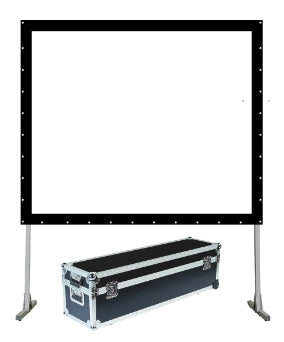
JK
 Low stock (2 left)
JK Fast Fold Screen, 200", 16:9 Aspect Ratio, Front & Rear Fabric - FF9200FPRP
R44,425.61
FF9200FPRP Low stock (2 left)
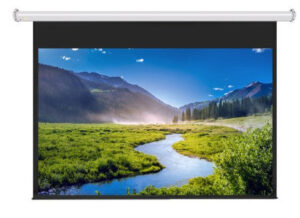
JK
In Stock
JK Manual Pull Down Screen, 100", 4:3 Aspect Ratio, Matt White Fabric - M4100
R2,712.87
M4100 In Stock
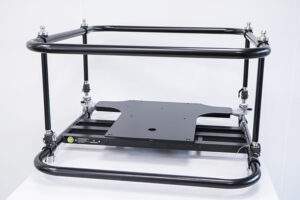
Hisense
Low stock (1 left)
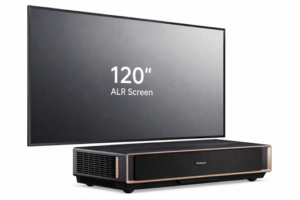
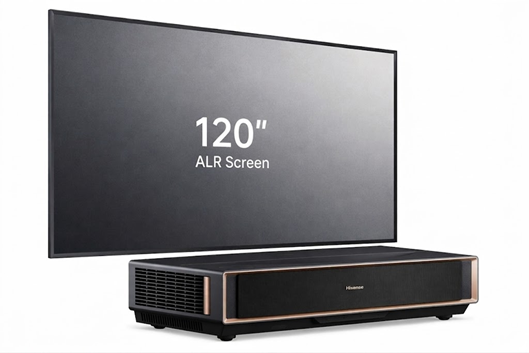
Hisense Laser Projection TV, 2500 Ansi Lumens, 4K resolution, UST, Incl 120" ALR - 120PT1
R48,652.19
120PT1 Low stock (1 left)
JK
Reviews
There are no reviews yet.