All Categories
- ATEN
- EPSON
- HISENSE
-
AV Signal Distribution
In AV Signal Distribution
- JK
-
Screens
In Screens
-
Projector
-
Cables
In Cables
- DTECH
- Business
- VISION
-
Projector Bracket
In Projector Bracket
-
Digital Signage Solutions
In Digital Signage Solutions
Brands
-
Audio
In Audio














All Categories
- ATEN
- EPSON
- HISENSE
-
AV Signal Distribution
In AV Signal Distribution
- JK
-
Screens
In Screens
-
Projector
-
Cables
In Cables
- DTECH
- Business
- VISION
-
Projector Bracket
In Projector Bracket
-
Digital Signage Solutions
In Digital Signage Solutions
Brands
-
Audio
In Audio

BROWSE CATEGORIES
Help
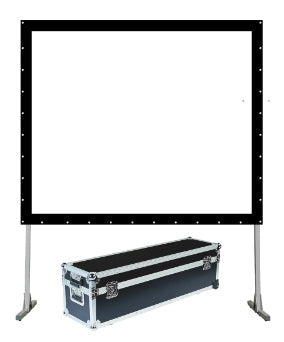
Fast Fold
JK Fast Fold Screen, 159″, 16:9 Aspect Ratio, Front & Rear Fabric – FF9159FPRP
R30,153.92
JK's 159" (404 cm) widescreen fast fold, the largest size that still packs into the 41 cm wide case, with fabric for front or rear projection.
- 3.52 x 1.98 m picture in a 3.68 x 2.14 m frame
- About 3,000 to 3,750 lumens on screen for a lit room
- Listed weight 54 kg; case 142 x 41 x 44 cm
- Brand :JK
- SKU :JK-FF9159FPRP
- Category :Fast Fold
- Availability :
 In Stock
8 in stock
The JK FF9159FPRP (JK-FF9 159FPRP) is a 159″ (404 cm) 16:9 fast fold: its picture is 3.52 m wide and 1.98 m high, it comes with fabric for front or rear projection, and the folding frame is aluminium on legs.
It is the biggest JK widescreen fast fold that still packs into the 41 cm wide case used by the smaller sizes: 142 x 41 x 44 cm at a listed 54 kg. The 200″ and 250″ models move to larger cases and 85 to 98 kg.
How many lumens 7 m² of picture needs
That picture has an area of 6.97 m² (75 sq ft). Screen brightness in foot-lamberts is the lumens reaching the screen divided by that area, multiplied by the fabric’s gain. JK gives no gain for either fabric, so 1.0 is the working figure. A blacked-out room reaches SMPTE’s 16 fL cinema reference with about 1,200 lumens. With the lights left on, the 40 to 50 fL that projector and screen makers recommend takes 3,000 to 3,750 lumens.
Epson’s EB-L790U is rated at 7,300 lumens, or 5,110 in economy mode. Only 1,080 of its 1,200 panel rows carry a 16:9 image, so about 6,570 lumens reach this screen at full power and about 4,600 in economy: roughly 88 and 61 fL at gain 1.0. Even in economy mode it clears the lit-room guideline.
Throw distance in front of or behind the screen
The EB-L790U’s 1.35 to 2.20:1 zoom fills the 3,520 mm width from about 4.8 to 7.8 m. For front projection that puts the projector several rows into the audience; for rear projection it is the clear depth you need behind the frame. Where the space behind is shallower, a 0.50 to 0.70:1 short-throw lens such as the one on Epson’s EB-L695SE cuts the distance to about 1.8 to 2.5 m. A projector behind the screen needs Rear selected in Epson’s Projection setting, or the audience sees the picture mirrored.
Frame, fabrics and the 41 cm case
Read in millimetres, the frame measures 3,680 x 2,140 mm, with an 80 mm border round the picture. That is a reading: JK’s table gives the frame and height columns no unit and heads the border column cm, but only millimetres fit the picture size. With the legs fully extended, the frame top is at 3,140 mm and its bottom edge about 1,000 mm above the floor. JK gives the “lowest position” for this size as 200, which on our reading is the height of the frame’s bottom edge when the legs are at their minimum.
On site, the frame unfolds and locks at built-in buttons. The supplier’s description, though not JK’s datasheet, says the fabrics fix with press-studs and lists a 1.5 m velvet skirt. Going from front to rear projection means changing the fabric and moving the projector to the other side.
Key specifications of the JK-FF9 159FPRP
| Picture | 3.52 m by 1.98 m, 16:9 |
|---|---|
| Diagonal | 159″ (404 cm) |
| Outside of frame | 3.68 by 2.14 m (JK prints no unit; mm fits) |
| Border round the picture | 80 mm, under a cm heading |
| Highest frame top | 3,140 mm |
| Lowest position given by JK | 200, read as mm from floor to frame |
| Fabrics | Front projection and rear projection |
| Structure | Aluminium alloy frame that folds, on legs |
| Flight case | Wheeled; 142 x 41 x 44 cm |
| Weight listed by JK | 54 kg |
| Model number | JK-FF9 159FPRP (FF9159FPRP) |
Questions about the JK-FF9 159FPRP
Will a 159 inch screen fit under a hotel function room ceiling?
Only if the ceiling clears the frame at its lowest setting. The frame alone is 2,140 mm tall, and if JK’s lowest-position figure means clearance below the frame, the screen stands about 2,340 mm high with the legs fully down. Measure the room at the point where the screen will stand, including any lights or ducting overhead.
What do I gain by moving up to the 200 inch model?
The JK FF9200FPRP 200″ fast fold adds 910 mm of width and 510 mm of height, for a 4,430 x 2,490 mm picture. The cost is weight and space: 85 kg, a 139 x 51 x 57 cm case, a 3,870 mm maximum height, and about 58% more lumens for the same screen brightness, since the picture area grows by that much.
Is there a gain figure for these fabrics?
No. JK gives neither a gain nor a viewing angle, for the front fabric or the rear one. Its datasheet says little about the front surface beyond calling it soft and resistant to wrinkling. That is why the brightness figures on this page assume gain 1.0: treat them as a starting point, and check the picture with your own projector before an event.
Can the frame be flown from truss instead of standing on its legs?
Not on JK’s published information. The datasheet shows the frame only on its own aluminium legs and lists no rigging points or flying hardware, so nothing confirms it is rated to hang. If the screen has to fly, have a rigger approve the hanging method before the event.
16:9
| Diag. Size (inch) | 106” |
|---|---|
| Viewing Area WxH (cm) | 234.5x132 |
| Left/Right Top/Bottom Border (cm) | 80 |
| Total Screen Length | 2505 |
| Total Screen Height | 1480 |
| Screen’s Lowest Position | 180 |
| Maximum Screen Total Height | 2560 |
| Packaging Dimensions LxWxH (cm) | 146x41x44 |
| Manu Model # | JK-FF9 106FPRP |
You must be logged in to post a review.
You may also like these
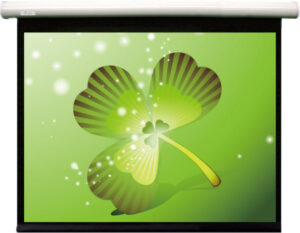
JK
JK Electric Screen, 150", 4:3 Aspect Ratio, Matt White Fabric - E4150
R11,382.06
E4150 Out of Stock
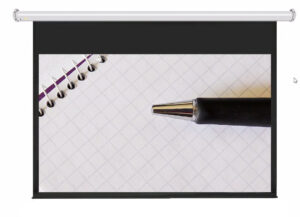
JK
In Stock
JK Electric Screen, 150", 16:10 Aspect Ratio, Matt White Fabric - E10150
R10,617.80
E10150 In Stock
JK
In Stock
JK Fixed Acoustic Transparent Thin Frame Screen, 119", 16:9 Aspect Ratio, Matt White Woven Fabric - F9119TFA
R12,787.52
F9119TFA In Stock
JK
In Stock
JK Manual Pull Down Screen, 150", 4:3 Aspect Ratio, Matt White Fabric, Screen control - M4150SC
R6,246.78
M4150SC In Stock
Reviews
There are no reviews yet.