All Categories
- ATEN
- EPSON
- HISENSE
-
AV Signal Distribution
In AV Signal Distribution
- JK
-
Screens
In Screens
-
Projector
-
Cables
In Cables
- DTECH
- Business
- VISION
-
Projector Bracket
In Projector Bracket
-
Digital Signage Solutions
In Digital Signage Solutions
Brands
-
Audio
In Audio














All Categories
- ATEN
- EPSON
- HISENSE
-
AV Signal Distribution
In AV Signal Distribution
- JK
-
Screens
In Screens
-
Projector
-
Cables
In Cables
- DTECH
- Business
- VISION
-
Projector Bracket
In Projector Bracket
-
Digital Signage Solutions
In Digital Signage Solutions
Brands
-
Audio
In Audio

BROWSE CATEGORIES
Help
HISENSE
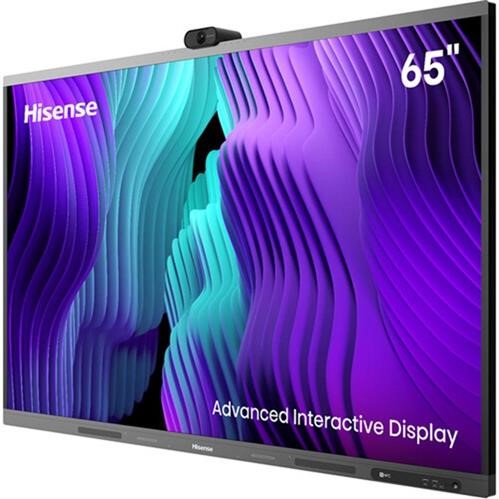
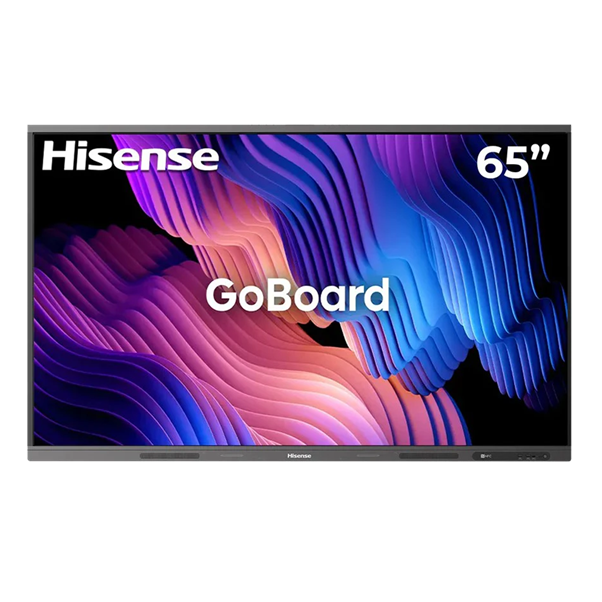
Hisense Interactive Panel, 65″, 4k resolution, 450nits, Android 16 – 65WE6GE
R63,460.65
The smallest WE6GE: a 65 inch 4K Android 16 touch display for huddle rooms and small classrooms where slides must read to about 4.9 m.
- Android 16.0 (EDLA), 16 GB RAM, 256 GB storage
- Three HDMI 2.1 inputs, 65 W USB-C, OPS slot
- 50MP Vision Bar, built in per Hisense's September 2026 datasheet
- 35.0 kg net; 600 x 400 mm VESA
- Brand :Hisense
- SKU :HISENSE-65WE6GE
- Category :HISENSE
- Availability :Out of Stock
Out of stock
The Hisense 65WE6GE is the smallest of the four WE6GE sizes, a range Hisense now markets as the GoBoard 6GE (its July 2026 datasheet used the name GoBoard Pro Live V2). It is a 65″ (165 cm) 4K infrared touch panel on Android 16 with Google EDLA certification, so Play Store apps, Google Classroom and Meet run on it without a PC. At 35.0 kg it is also the lightest, its VESA holes sit 600 mm by 400 mm apart, and it suits rooms whose back row is no more than about 4.9 m from the screen.
How far back a 65 inch screen can be read
A 65 inch 16:9 picture is about 0.81 m tall. Epson’s 4/6/8 guideline sets the maximum viewing distance as a multiple of the screen height: four times for detailed work such as spreadsheets (about 3.2 m), six for ordinary slides (about 4.9 m) and eight for video (about 6.5 m). Where the back row is farther away, the 86 inch Hisense 86WE6GE moves the detail and slide limits out to about 4.3 m and 6.4 m.
Hisense rates the IPS panel at 450 nits and 1200:1 contrast, both typical figures, with 178° viewing angles in both directions behind anti-glare glass.
The Vision Bar camera and speakers
Hisense’s latest WE6GE datasheet, dated September 2026, lists the camera as built in: a Hisense Vision Bar on the top edge holding a 50MP 4K camera with a physical privacy cover and eight microphones, which Hisense rates for voice pickup up to 12 m. With the bar fitted the panel stands 932.9 mm tall, against 888.7 mm without it. Hisense’s July 2026 datasheet and its GoBoard 6GE product page still list the camera as optional, so confirm the bar is included when you order.
Sound comes from 2 x 18 W plus 25 W speakers with Dolby Atmos support, and Google Meet is one of the preinstalled apps.
Android 16, Google apps and the whiteboard
Android 16.0 runs on a processor that pairs four 2.2 GHz A73 cores with four 2.0 GHz A53 cores and a Mali-G52 GPU, backed by 16 GB RAM and 256 GB for apps and files. Hisense’s native app list covers Chrome, Drive, Docs, Sheets, Gmail, Calendar, YouTube and Google Classroom, and the Play Store supplies anything else.
The whiteboard turns handwriting into typed text, does calculations automatically and plots functions, and two pens can write at the same time. A floating assistant handles Gemini-based questions and Word Scan & Search. Desktop Mode opens apps in windows, up to four tiled at once, and tapping an NFC card signs the user in and starts cloud sync.
Laptops, an OPS computer and wireless casting
Wired sources connect through three HDMI 2.1 inputs or a USB-C input with 65 W power delivery, and two touch USB ports pass touch control back to connected computers. The remaining connections are one USB 2.0 and three USB 3.0 ports, Gigabit LAN in and out, RS232 on an RJ45 socket, an audio input, an HDMI output, and audio outputs on 3.5 mm and S/PDIF.
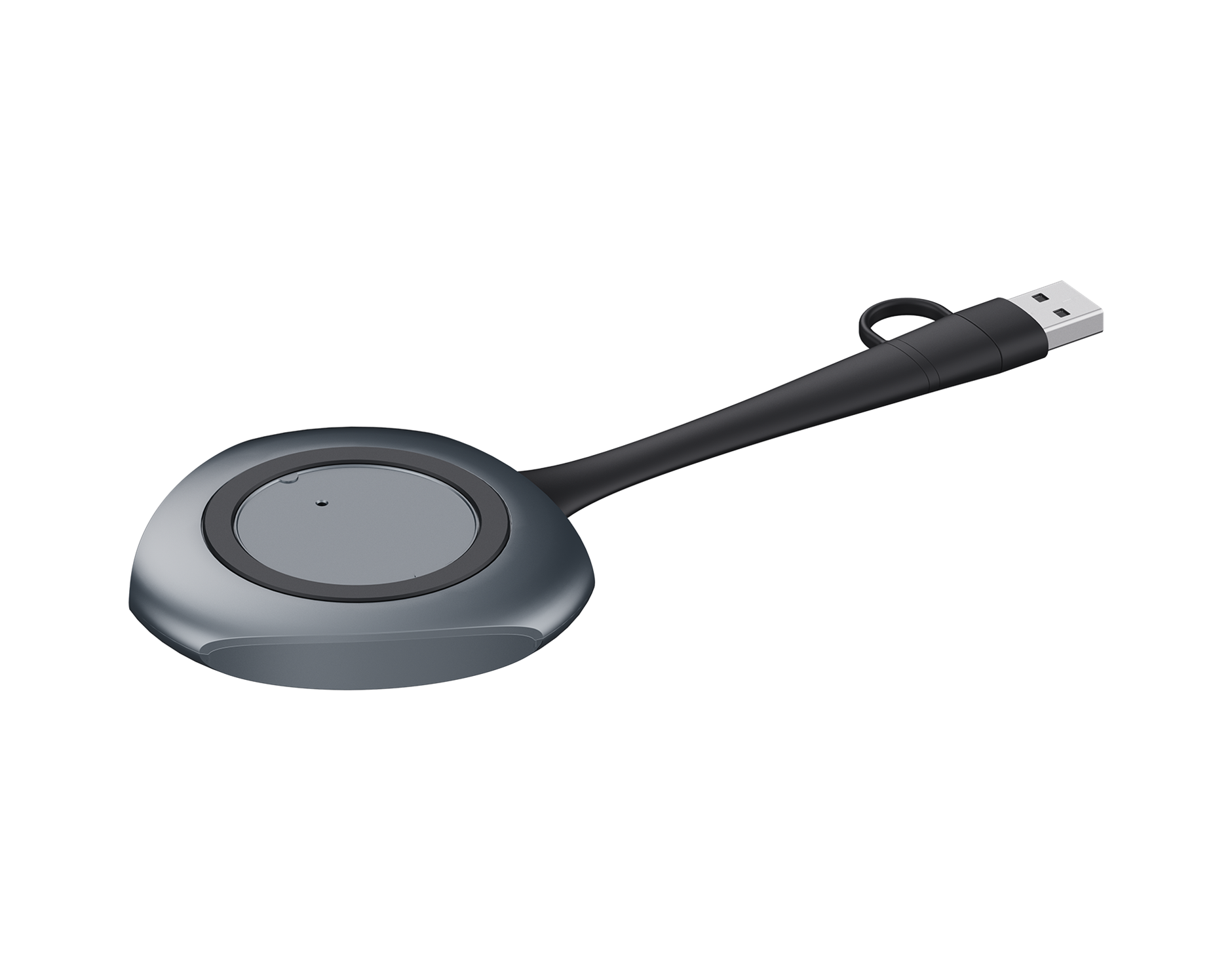
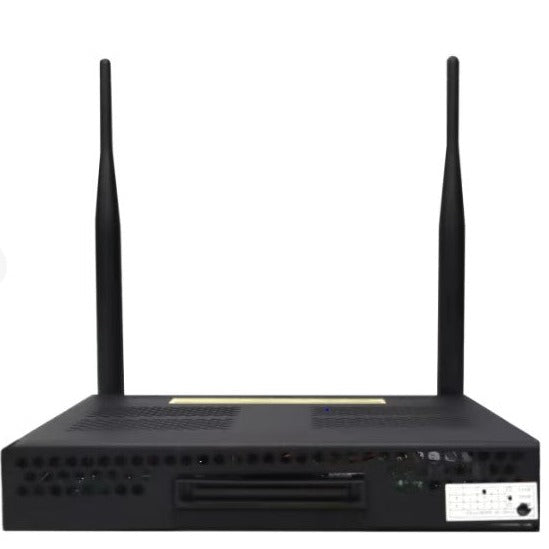
The OPS slot supplies 18 V at 5 A for a slot-in Windows computer such as the Hisense OPS72D. Without cables, the panel accepts six types of screen sharing from up to nine devices at once, and the Hisense HBT55E transmitter adds a one-button USB-C option for laptops.
How the 65WE6GE differs from the 65WM6FEA
The Hisense 65WM6FEA, Hisense’s GoBoard Live Pro, matches this panel’s size, its 35.0 kg weight and its 600 x 400 mm mounting, and also carries a 50MP camera with eight microphones. Hisense’s product pages show where the two part:
- Android: 16.0 from the factory here, against 13.0 on the WM6FE-A, which Hisense lists for an over-the-air upgrade to 16 from August 2026.
- Memory: 16 GB RAM and 256 GB storage, against 8 GB and 128 GB.
- Brightness: 450 nits, against 400 nits.
- Touch USB ports: two, against one.
- Camera: a separate Vision Bar on the top edge, against one integrated into the panel.
Wall bracket, WH3315 stand and box contents
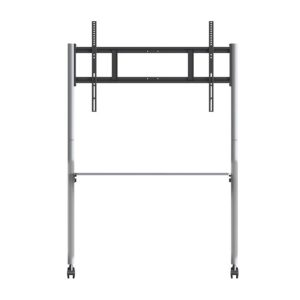
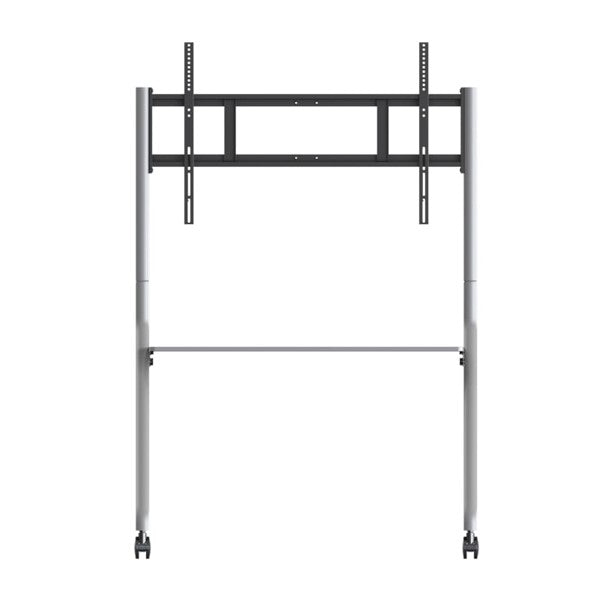
The four M8 mounting holes are spaced 600 mm across and 400 mm high. Hisense includes a wall mount bracket, but its datasheet gives no load rating for it, so check that the bracket, the wall and the fixings are each good for at least the 35.0 kg net weight. To roll the panel between rooms, Hisense lists the WE6GE at 65 inches for the Hisense WH3315 mobile stand, which is rated for 100 kg and has three height settings and lockable wheels.
The carton weighs 45.0 kg packed and also holds two pens, the remote with two batteries, two NFC cards, a power cable (Hisense says the type depends on the country) and the user manual.
Key specifications of the 65WE6GE
| Screen | 65″, IPS, D-LED backlight |
|---|---|
| Brightness | 450 nits (typ.) |
| Resolution | 3840 x 2160 at 60 Hz |
| Contrast ratio | 1200:1 (typ.) |
| Operating system | Android 16.0 with Google EDLA |
| Processor and memory | Octa-core, 16 GB RAM, 256 GB ROM |
| Touch | Infrared frame, up to 55 points |
| Camera and microphones | 50MP 4K Vision Bar, 8 microphones (built in on the September 2026 datasheet) |
| Connections | 3 x HDMI 2.1 in, 65 W USB-C, OPS slot |
| Power (without OPS) | 136.78 W typical, 240 W max |
| Weight and VESA | 35.0 kg net; 600 x 400 mm (M8) |
Questions about the Hisense 65WE6GE
Which wireless casting dongle works with the 65WE6GE?
The Hisense HBT55E, which Hisense lists for 65, 75, 86 and 100 inch WE6GE panels only. It plugs into a laptop’s USB-C port, needs no driver on Windows 10 or 11 or on macOS 10.9 and later, starts casting in about 3 seconds and sends up to 4K at 30 Hz. Hisense lists its HT007E and HT008E dongles for the WM6FE and MR6DE ranges, not for the WE6GE.
Can the 65WE6GE run Windows?
Yes, once an OPS computer is fitted in its slot. Hisense lists two for the WE6GE series, both on Windows 11 Pro: the OPS72D (Core i5-13420H, 8 GB memory, 256 GB SSD) and the OPS72E, which steps up to a Core i7-13620H with 16 GB and 512 GB.
Will the 65WE6GE fit a wall bracket I already have?
Only if the bracket takes a 600 x 400 mm VESA pattern with M8 screws and its rated load covers at least the panel’s 35.0 kg. Leave room above the screen for the Vision Bar, and note that Hisense gives the depth with the bar fitted as 118.5 mm.
Is there a 65 inch WE6GE without the camera?
Yes: the Hisense 65WE6GEE. Hisense’s WE6GE-E datasheet lists no camera but the same 65 inch IPS panel, Android 16 system, ports and 35.0 kg weight, with a lower maximum power draw of 225 W against 240 W. It suits a room that already has a video bar or never holds calls.
Interactive Display panel
| LCD Size | 65" / 75" / 86" |
|---|---|
| Backlight Type | D-LED |
| Resolution | 3840 x 2160 (Pixels) |
| Brightness | 450nits(typ.) |
| Contrast Ratio | 1200:1(typ.) |
| Response Time | 6ms(typ.) |
| Refreshing Frequency | 60Hz |
| Viewing Angle | 178°(H) / 178°(V) |
| Lifetime | 50,000 hrs (min.) |
| Colour Gamut (X% NTSC) | 85% (types of.) |
| Display Colours | 1.07B(10bit) |
System
| CPU | Architecture - A73x4 + A53x4 Octa-core // Working Frequency - 2.2GHz + 2.0GHz |
|---|---|
| GPU | MaliG52 |
| RAM | 16GB |
| ROM | 256GB |
| Operating System | Android 16.0 |
| Language | English (default), Chinese, French, Spanish, German, Italian, Polish, Finnish, Norwegian, Swedish, Thai, Indonesian, Japanese, Russian, Arabic, Vietnamese, Serbian, Kazakh; Croatian, Slovenian, Czech, Slovak, Hungarian, Romanian, Bulgarian, Albanian, Macedonian, Greek, Turkish, Afrikaans, Malay |
Power
| Power Requirements | AC 100V ~ 240V, 50/60Hz |
|---|---|
| Power Consumption Without OPS | TBD (Max) / TBD (Typ.) |
Connectivity
| OPS Power | DC 18V/5A |
|---|---|
| Wi-Fi | WiFi 5 + WiFi 6E |
| Bluetooth | BT5.3 |
| NFC | Yes (Sensor) |
| Camera | Optional |
Touch
| Sensing Type | Infrared Touch Frame |
|---|---|
| Surface Protection | Anti-Glare Glass |
Physical
| 65” | 1,488.1 x 115.3 x 888.7 mm |
|---|---|
| 75” | 1,709.9 x 120.4 x 1,013.4 mm |
| 86” | 1,954.7 x 120.4 x 1,151.1 mm |
| 65” | 1,488.1 x 118.5 x 932.9 mm |
| 75” | 1,709.9 x 122.7 x 1,057.6 mm |
| 86” | 1,954.7 x 122.7 x 1,195.3 mm |
| 65” | 1,629 x 189 x 1,060 mm |
| 75” | 1,850 x 185 x 1,165 mm |
| 86” | 2,095 x 189 x 1,347 mm |
| 65” | 35.0 kg |
| 75” | 46.6 kg |
| 86” | 59.0 kg |
| 65” | 45.0 kg |
| 75” | 57.6 kg |
| 86” | 76.0 kg |
| Housing Material | Front Shell: Aluminium // Rear Shell: Plastic |
| Housing Colour | Black + Tarnish |
| 65” | 600 x 400 mm, 4-M8 screw |
| 75” | 600 x 600 mm, 4-M8 screw |
| 86” | 1,000 x 600 mm, 4-M8 screw |
Environment
| Operation Temperature | 0 - 40°C |
|---|---|
| Operation Humidity | 20% - 90% |
Certification
| Standard Certification | CB/CE/ERP/SouthAfrica Energy Efficiency/cTUVus/CEC/UKCA/FCC/IC/RCM/Energy Star/EDLA |
|---|
You must be logged in to post a review.
You may also like these
Hisense
Hisense All-In-One LED, 136", 2K resolution, Android 9.0 OPS - OP136DE
R619,229.05
OP136DE Out of Stock
Hisense
Hisense Interactive Panel, 65", 4k resolution, 400 nits, Android 14.0 - 65WE3FE
R31,952.55
65WE3FE Out of Stock
Hisense
Reviews
There are no reviews yet.