All Categories
- ATEN
- EPSON
- HISENSE
-
AV Signal Distribution
In AV Signal Distribution
- JK
-
Screens
In Screens
-
Projector
-
Cables
In Cables
- DTECH
- Business
- VISION
-
Projector Bracket
In Projector Bracket
-
Digital Signage Solutions
In Digital Signage Solutions
Brands
-
Audio
In Audio






All Categories
- ATEN
- EPSON
- HISENSE
-
AV Signal Distribution
In AV Signal Distribution
- JK
-
Screens
In Screens
-
Projector
-
Cables
In Cables
- DTECH
- Business
- VISION
-
Projector Bracket
In Projector Bracket
-
Digital Signage Solutions
In Digital Signage Solutions
Brands
-
Audio
In Audio

BROWSE CATEGORIES
Help
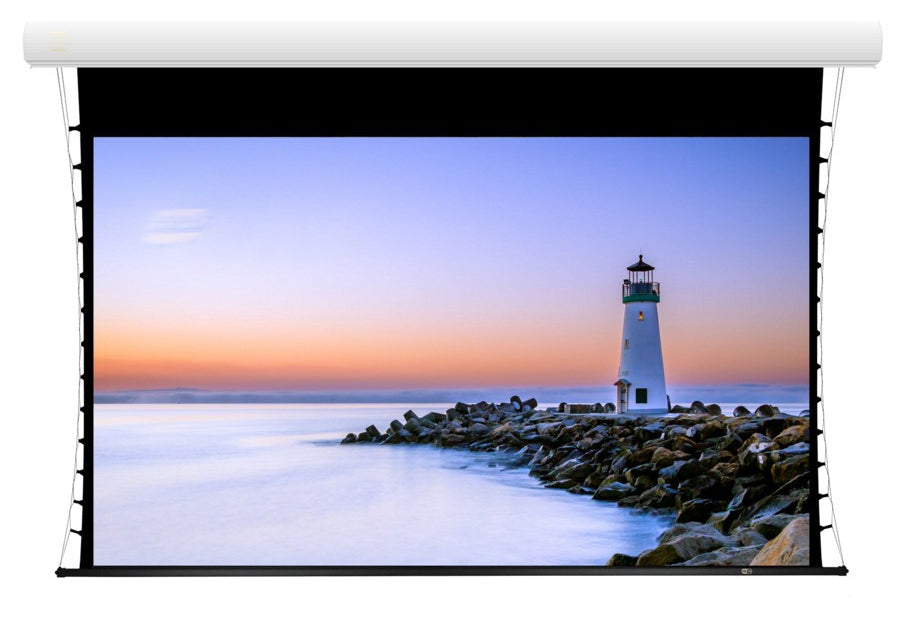
Electric
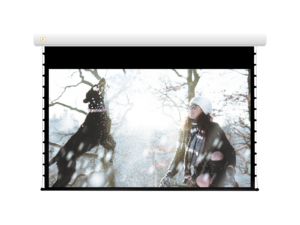
JK Electric In Ceiling Tab Tensioned Screen Screen, 133″, 16:10 Aspect Ratio, Matt White Fabric – E10133HDTIC
R20,751.39
A 133-inch (338 cm) 16:10 motorised screen recessed into a suspended ceiling, for lecture rooms and large meeting rooms with the height for a 1.79 m tall picture.
- Tab-tensioned matt white image, 2,860 x 1,790 mm
- Only 100 mm of black above the image
- Case 3,215 or 3,380 mm long: measure before cutting the ceiling
- RF handset, 12 V trigger input and RS-232
- Brand :JK
- SKU :JK-E10133HDTIC
- Category :Electric
- Availability :
 In Stock
1 in stock
JK’s HD3 E10 133TIC, sold here as the E10133HDTIC, is a 133-inch (338 cm) 16:10 electric screen whose case hangs inside a suspended ceiling. Its tab-tensioned matt white picture is 2,860 x 1,790 mm, and both JK’s datasheet and the distributor’s table put just 100 mm of black above it, so the image starts close to the ceiling. Whether the room is tall enough for a picture almost 1.8 m high decides the fit.
Ceiling height for a 1,790 mm tall picture
Add the 100 mm drop to the image height and the lower edge of the picture lands about 1,890 mm below the ceiling. For three ceiling heights:
- 2.7 m: the picture ends roughly 0.81 m above the floor
- 3.0 m: roughly 1.11 m
- 3.3 m: roughly 1.41 m
In a flat-floored room, front-row heads hide the bottom of a low picture, which favours the taller ceilings.
Projector distance and brightness with the Epson EB-L530U
A WUXGA projector’s 16:10 frame matches this screen with no bands. For the Epson EB-L530U, Epson’s throw ratio of 1.35 to 2.20 means the 2,860 mm width needs between about 3.86 m and 6.29 m of throw. Epson rates its white light output at 5,200 lumens (ISO 21118). There is no gain figure from JK, so the brightness on this screen cannot be predicted from the specifications.
Hanging a 3,215 mm or 3,380 mm case from the slab
In JK’s drawing, hanging brackets bolt to the concrete soffit with expansion screws, threaded rods drop to the ends of the case, and nuts on the rods set its height. In section the case is 186 mm wide by 157 mm deep. Each published case length gives a different cut:
- JK datasheet, 3,215 mm: opening about 3,295 x 160 mm, brackets about 3,240 mm apart
- Distributor’s table, 3,380 mm: opening about 3,460 x 160 mm, brackets about 3,405 mm apart
Each bracket fixes through two holes 180 mm apart. Gross weight is 29 kg on JK’s datasheet and 48 kg in the distributor’s table, so work to 48 kg when choosing anchors and rods. The carton is 3,410 x 220 x 220 mm or 3,560 x 220 x 250 mm, depending on the source. For roof trusses or purlins, which the drawing does not show, the fixing is the installer’s to engineer. Run power and control cables to the receiver position before boarding, and cut the opening only once the delivered case has been measured.
The surface E10133HDT, and the 16:9 model at this size
JK’s E10133HDT has this 2,860 x 1,790 mm picture in a case mounted on the face of a wall or ceiling, so it can go into a finished room; its end-cap receiver takes RF and, through an extended probe, infrared. For 16:9 content at the same diagonal, the JK E9133HDTIC trades 135 mm of height for 90 mm of extra width at 2,950 x 1,655 mm, and it is the 133-inch in-ceiling size JK also makes in high-contrast grey.
Key specifications of the JK HD3 E10 133TIC
| Picture size | 2,860 x 1,790 mm |
|---|---|
| Diagonal and format | 133″ (338 cm), 16:10 |
| Black above the picture | 100 mm |
| Screen surface | Tab-tensioned fibreglass, matt white |
| Recessed case length | 3,215 mm (JK datasheet) or 3,380 mm (distributor), brackets excluded |
| Case profile | 186 mm wide, 157 mm deep |
| Cut-out in the ceiling | 3,295 or 3,460 x 160 mm by JK’s drawing, following the measured case |
| Gross weight | 48 kg (distributor) or 29 kg (JK datasheet); work to 48 kg |
| Carton | 3,560 x 220 x 250 mm (distributor) or 3,410 x 220 x 220 mm (JK datasheet) |
| Ways to operate | RF handset, 12 V trigger input or RS-232, via a separate receiver |
Questions about the JK HD3 E10 133TIC
What if the ceiling is lower than 3 m?
Then the bottom of the picture falls below about 1.1 m from the floor, and on a flat floor people behind the front row may lose some of it. The 119-inch 16:10 in-ceiling model, at 2,560 x 1,600 mm, ends roughly 1.75 to 1.80 m below the ceiling instead of 1.89 m.
How far back can the audience sit?
Up to about 10.7 m for general presentations, by Epson’s 4/6/8 guideline, which allows six times the screen height; this picture is 1.79 m tall. For fine detail such as spreadsheets the guideline stops at four heights, about 7.2 m, and for video it stretches to eight, about 14.3 m.
How loud and how fast is the motor?
JK publishes no figure for either. Its sheet calls the tubular motor quiet and fast but gives no decibel rating, travel time or power draw, so the noise cannot be compared with other screens on paper.
Can the screen lower itself at projector power-on?
Yes, if a 12 V trigger output on the projector or a control processor is wired to the screen’s trigger input; the screen then lowers at power-on and rises at shutdown. The EB-L530U lists RS-232C and no trigger output, so with that projector a control system drives both over RS-232.
You must be logged in to post a review.
You may also like these
Hisense
Hisense Laser Projection TV, 3500 Ansi Lumens, 4K resolution, UST, Incl 150" ALR - 150PX4PRO
R119,481.78
150PX4PRO Out of Stock
JK
JK Fast Fold Screen, 200", 16:10 Aspect Ratio, Front & Rear Fabric - FF10200FPRP
R45,550.51
FF10200FPRP Out of Stock
JK
In Stock
JK Fixed Thin Frame Screen, 106", 16:10 Aspect Ratio, Matt White Fabric - F10106TF
R9,088.18
F10106TF In Stock
JK
In Stock
JK Fixed Frame Screen, 173", 16:9 Aspect Ratio, Matt Grey Fabric - F9173G
R14,234.17
F9173G In Stock

Hisense
Reviews
There are no reviews yet.