All Categories
- ATEN
- EPSON
- HISENSE
-
AV Signal Distribution
In AV Signal Distribution
- JK
-
Screens
In Screens
-
Projector
-
Cables
In Cables
- DTECH
- Business
- VISION
-
Projector Bracket
In Projector Bracket
-
Digital Signage Solutions
In Digital Signage Solutions
Brands
-
Audio
In Audio














All Categories
- ATEN
- EPSON
- HISENSE
-
AV Signal Distribution
In AV Signal Distribution
- JK
-
Screens
In Screens
-
Projector
-
Cables
In Cables
- DTECH
- Business
- VISION
-
Projector Bracket
In Projector Bracket
-
Digital Signage Solutions
In Digital Signage Solutions
Brands
-
Audio
In Audio

BROWSE CATEGORIES
Help
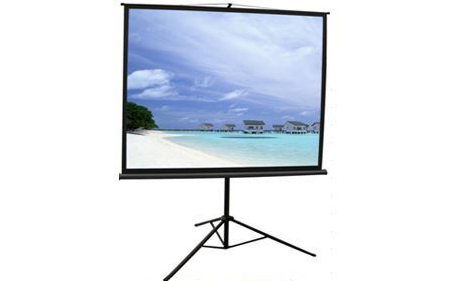
JK
JK Tripod Screen, 84″, 4:3 Aspect Ratio, Matt White Fabric – T484
R3,066.67
JK's smallest and lightest tripod screen, with 84" of 4:3 matt white for a trainer or teacher who sets up in a different room each day.
- Viewing area 1710 x 1280 mm, 84" (213 cm) diagonal
- 1880 mm case, 13.6 kg packed
- Filled edge to edge by an XGA (4:3) projector
- Keystone eliminator for a projector below the screen
- Brand :JK
- SKU :JK-T484
- Category :JK
- Availability :Out of Stock
Out of stock
An 84″ (213 cm) 4:3 screen on a reinforced steel tripod, the JK-T4 84 (our code T484) has a matt white surface of 1710 x 1280 mm. Its 1.88 m case and 13.6 kg packed weight are the shortest and lightest of JK’s five tripod models. An XGA projector fills the surface with no fabric to spare.
Picture size from XGA, WXGA and widescreen projectors
An XGA (1024 x 768) projector shares the screen’s 4:3 shape and covers all of it. One example is the Epson EB-X49: Epson gives it a 1.48 to 1.77 throw ratio, which places the lens 2.53 to 3.03 m from the fabric for the full 1710 mm width.
Wider projectors use less of the height. A WXGA or other 16:10 model across the full width gives 1710 x 1069 mm and leaves 211 mm blank; a 16:9 model gives 1710 x 962 mm, about 77″ diagonal, with 318 mm blank. If most of your material is widescreen, the 100 inch JK-T4 100 raises a 16:9 picture to 2030 x 1142 mm, in a case 340 mm longer.
The shortest case in JK’s tripod range
At 1880 mm, the case is 340 mm shorter than the 100 inch model’s and 730 mm shorter than the 120 inch’s, and its 1975 x 216 x 165 mm carton is the only one in the range under 2 m. The 13.6 kg is a gross figure with the packaging included. A carry handle sits on the case.
Keystone eliminator for a projector on a low table
Set the projector on a table and aim it up at a screen whose centre sits higher than the lens, and the picture comes out wider at the top than at the bottom, because the top edge has further to travel. Turning the screen to face the beam squarely removes that wedge. JK’s keystone eliminator does it from the head of the tripod, tilting the top of the screen forward, towards the projector and the room, and JK says it stays out of sight when not in use. No tilt angle is published, so how steep a throw it can fully correct is not known.
Key specifications of the JK-T4 84
| JK model | JK-T4 84 (T484) |
|---|---|
| White surface, width by height | 1710 x 1280 mm |
| Diagonal and shape | 84″ (213 cm), 4:3 |
| Surface | Matt white fabric |
| Case length | 1880 mm |
| Total height, screen only (JK figure) | 1520 mm |
| Black drop | 60 mm |
| Carton | 1975 x 216 x 165 mm |
| Gross weight | 13.6 kg |
Questions about the JK-T4 84
Does the T484 come with a carry bag?
JK lists no bag. The screen packs into its own 1880 mm case, which has a carry handle, and JK quotes one carton for the model, 1975 x 216 x 165 mm, with no separate box for the tripod.
What gain and viewing angle does the fabric have?
JK does not say. The tripod datasheet describes the surface only as matt white fabric, with no gain, viewing angle or construction. JK’s pull-down screens list a PVC-coated glass-fibre fabric, but the tripod sheet does not say whether the tripods use the same material.
Will the JK-T4 84 stand steady on a smooth floor?
JK fits anti-skid plastic caps to the legs of the steel tripod but publishes no leg span or stability rating. On a polished floor or a sloping stage, check that the stand sits firm before the audience arrives.
Is there a fixed JK screen with the same picture?
Yes, the JK-M4 84 (M484) manual pull-down has the same 1710 x 1280 mm viewing area, in a case mounted in the room. Choose it where the screen never moves; the tripod suits training that changes rooms, at the cost of floor space in front of the audience.
You must be logged in to post a review.
You may also like these
JK
 Low stock (2 left)
JK Fixed Thin Frame Screen, 133", 16:9 Aspect Ratio, Matt White Fabric - F9133TF
R11,184.15
F9133TF Low stock (2 left)
JK
In Stock
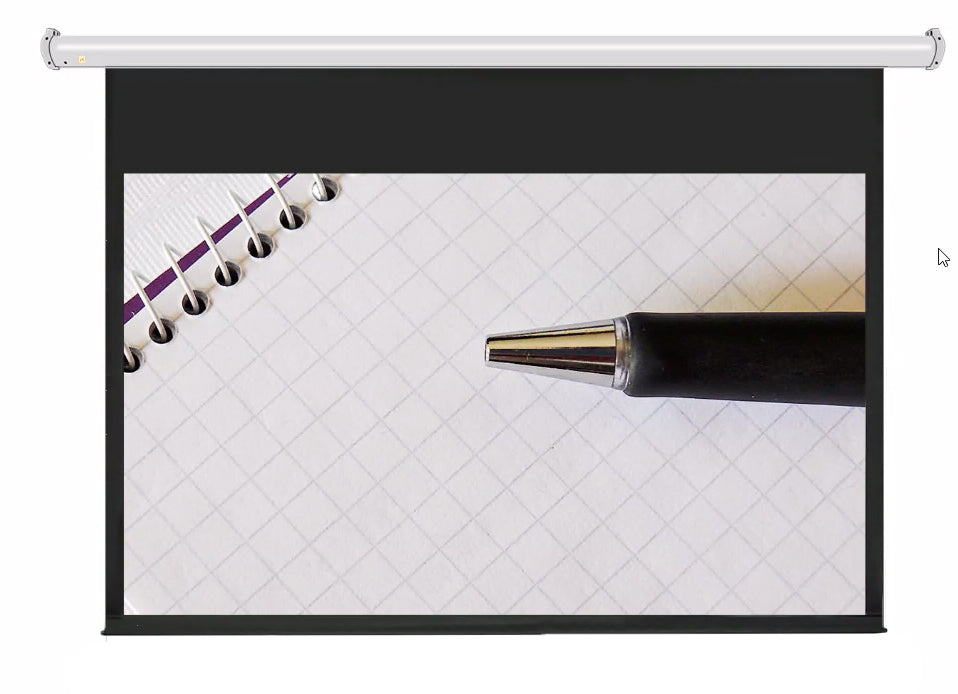
JK Electric Screen, 133", 16:10 Aspect Ratio, Matt White Fabric - E10133
R10,059.72
E10133 In Stock
JK
In Stock
JK Fixed Frame Screen, 106", 16:10 Aspect Ratio, Matt White Fabric - F10106
R7,535.21
F10106 In Stock
JK
JK Fixed Frame Screen, 92", 16:10 Aspect Ratio, Matt White Fabric - F1092
R6,329.60
F1092 Out of Stock
JK
In Stock
JK Fixed Frame Screen, 106", 16:9 Aspect Ratio, Matt Grey Fabric - F9106G
R10,742.77
F9106G In Stock
Reviews
There are no reviews yet.