All Categories
- ATEN
- EPSON
- HISENSE
-
AV Signal Distribution
In AV Signal Distribution
- JK
-
Screens
In Screens
-
Projector
-
Cables
In Cables
- DTECH
- Business
- VISION
-
Projector Bracket
In Projector Bracket
-
Digital Signage Solutions
In Digital Signage Solutions
Brands
-
Audio
In Audio














All Categories
- ATEN
- EPSON
- HISENSE
-
AV Signal Distribution
In AV Signal Distribution
- JK
-
Screens
In Screens
-
Projector
-
Cables
In Cables
- DTECH
- Business
- VISION
-
Projector Bracket
In Projector Bracket
-
Digital Signage Solutions
In Digital Signage Solutions
Brands
-
Audio
In Audio

BROWSE CATEGORIES
Help
EPSON
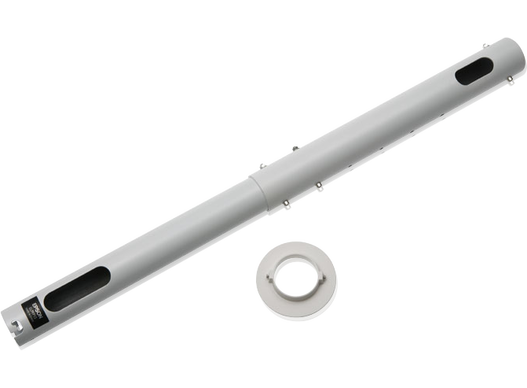
Epson Ceiling Mount Projector Bracket Extension Pole – ELPFP13
R1,991.22
Epson's shorter extension pipe for its ELPMB22 and ELPMB23 ceiling mounts, for bringing a projector down past a suspended ceiling or bulkhead.
- 668 to 918 mm from ceiling plate to projector
- Adjusts in 50 mm steps
- Two-piece pipe with M5 x 70 bolts and nuts and an ornamental bush
- Not a mount: Epson documents it for the ELPMB22 and ELPMB23
- Brand :Epson
- SKU :EPSON-ELPFP13
- Category :EPSON
- Availability :Out of Stock
Out of stock
The Epson ELPFP13 (part V12H003P13) is a two-piece extension pipe that goes between an Epson ceiling mount’s ceiling plate and its tilt fixture. Epson’s ELPMB22 and ELPMB23 manual names it as one of two pipes for those brackets, and with it fitted the projector hangs 668 to 918 mm below the ceiling plate, set in 50 mm steps. Epson’s projector guides list it as the 450 mm ceiling pipe. It cannot hold a projector without the mount.
Checking that 668 to 918 mm suits your room
Epson measures the range from the ceiling plate to the projector. Work out where the projector has to sit from its throw distance and the screen height, then check that the point falls inside the range. Above 918 mm, the Epson ELPFP14 takes over and runs to 1,168 mm. Below 668 mm there is no Epson pipe: the mount manual names only these two, and the bare bracket is 150 mm tall, so a drop of, say, 400 mm cannot be built from these Epson parts.
Mounts it is documented for
Epson’s manual for the Epson ELPMB22 (medium-size projectors) and the Epson ELPMB23 (small projectors) names the ELPFP13 and ELPFP14 as their extension pipes. The pipe’s own manual says only that it extends an Epson projector ceiling mount, and Epson UK’s ELPFP13 page names no mount, though it carries a long projector list for “one or more items in this range”. Check your projector on the mount’s list rather than the pipe’s.
Parts and assembly
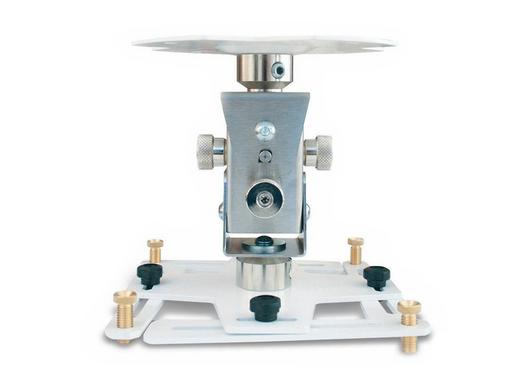
Epson’s instructions show two pipe sections (pipe A and pipe B), M5 x 70 through-bolts with M5 nuts, an ornamental bush and the manual. Pipe A bolts through the mount’s ceiling plate, pipe B takes the mount’s tilt fixture using screws from the mount’s own package, and the two sections are bolted together at the chosen height.
Load and safety
Epson publishes no load rating for the ELPFP13. Its manual warns only that the total with a projector can reach several tens of kilograms, which is a caution rather than a rating, and asks the installer to check the ceiling’s construction, material and strength and to use the screws supplied. Epson expects a specialist to install it and to make any later change of direction or angle, and says the bolts must not be loosened once the projector is up.
Key specifications of the Epson ELPFP13
| Epson part number | V12H003P13 |
|---|---|
| Listed by Epson as | Ceiling pipe (450 mm) |
| Ceiling plate to projector | 668 to 918 mm |
| Adjustment step | 50 mm |
| Documented for | Epson ELPMB22, ELPMB23 |
| In the box | Pipe A, pipe B, M5 x 70 bolts with M5 nuts, ornamental bush, manual |
| Load rating | Not published by Epson |
Questions about the Epson ELPFP13
Can the ELPFP13 hold a projector without a ceiling mount?
No. The ceiling plate, ball joint and projector plate still come from an ELPMB22 or ELPMB23; the pipe only lengthens the gap between the plate and the joint.
Should I order the ELPFP13 or the ELPFP14?
Order by the drop you need. At exactly 918 mm either pipe reaches, but each is then at one end of its travel: the ELPFP13 can only shorten from there and the ELPFP14 can only lengthen, so choose by which way the drop might need to change later.
Will the ELPFP13 fit an Epson ELPMB68?
Epson does not document that pairing. The ELPMB68 extends with Epson’s ELPMB70 column, 685 to 1,085 mm long, which fits between its ceiling plate and adjustment block.
What is the ring that comes with the ELPFP13?
An ornamental bush. Epson’s instructions fit it, if you want it, to hide the hole where the pipe passes through the ceiling; it carries no load.
You must be logged in to post a review.
You may also like these
Epson
Epson Business Projector, 4100 Ansi Lumens, 1080P resolution, 16:9 Aspect Ratio - EB770F
R48,039.51
EB770F Out of Stock
Epson
Epson Consumer Projector, 3000 Ansi Lumens, WXGA resolution, 16:10 Aspect Ratio - COWX02
R8,862.06
COWX02 Out of Stock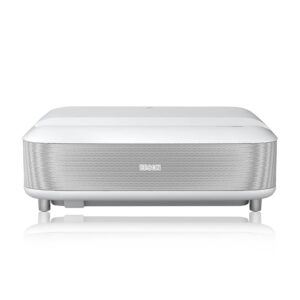
Epson
 Low stock (1 left)
Reviews
There are no reviews yet.