All Categories
- ATEN
- EPSON
- HISENSE
-
AV Signal Distribution
In AV Signal Distribution
- JK
-
Screens
In Screens
-
Projector
-
Cables
In Cables
- DTECH
- Business
- VISION
-
Projector Bracket
In Projector Bracket
-
Digital Signage Solutions
In Digital Signage Solutions
Brands
-
Audio
In Audio














All Categories
- ATEN
- EPSON
- HISENSE
-
AV Signal Distribution
In AV Signal Distribution
- JK
-
Screens
In Screens
-
Projector
-
Cables
In Cables
- DTECH
- Business
- VISION
-
Projector Bracket
In Projector Bracket
-
Digital Signage Solutions
In Digital Signage Solutions
Brands
-
Audio
In Audio

BROWSE CATEGORIES
Help
ALR
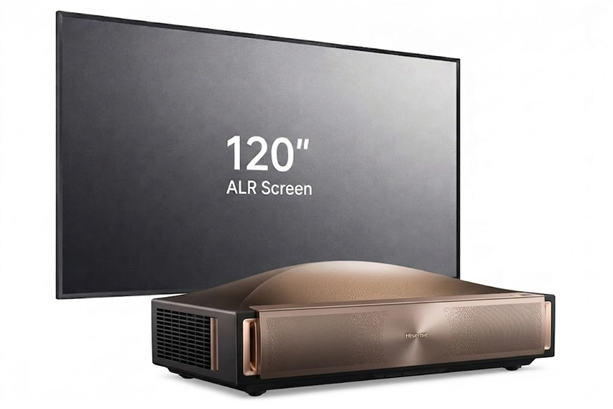
Hisense Laser Projection TV, 5000 Ansi Lumens, 4K resolution, UST, Incl 120″ ALR – 120L9Q
R102,585.45
The Hisense L9Q laser TV sold with a 120" ALR screen, for living rooms and home cinemas with about 2.7 m of clear wall and a low TV unit.
- A 2.66 x 1.49 m picture area
- Console set 216 mm out from the wall
- Screen top about 1.94 m above the console's surface
- 5,000 ANSI lumens and 116 W 6.2.2 sound
- Brand :Hisense
- SKU :HISENSE-120L9Q
- Category :ALR
- Availability :
 In Stock
1 in stock
The Hisense 120L9Q sets the L9Q laser TV against a 120″ (305 cm) ALR screen, the middle size of the three L9Q sets. Its picture spans 2,657 by 1,494 mm, and Hisense places the console 216 mm from the wall to fill it, so plan on about 2.7 m of clear wall and a TV unit at least 533 mm deep.
Inside the console are three lasers rated at 5,000 ANSI lumens and a 116 W 6.2.2 speaker system tuned by Devialet.
How much room a 120 inch picture takes
Width comes first: 2,657 mm of picture plus the 20 mm border Hisense’s chart assumes on each side gives a screen close to 2.7 m across, before any space you want around it. Depth comes next. The back of the console sits 216 mm from the wall and the console is 317 mm deep, so a unit pushed against the wall needs at least 533 mm of top.
Height needs the most checking. Hisense puts the screen’s lower edge 410 mm above the surface the console stands on, and the picture adds 1,494 mm, so the screen’s upper edge finishes near 1.94 m above the unit. On a 450 mm unit that is about 2.39 m from the floor, which leaves almost nothing to spare under a 2.4 m ceiling, given the chart’s 5% tolerance; a lower unit gives more room. The Hisense 100L9Q tops out about 30 cm lower, and the 150L9Q needs a higher ceiling still.
Our listing identifies the screen only by its size and ALR surface, with no make, gain or frame size, so these figures rest on the border and 30 mm screen depth used in Hisense’s chart. A wider frame needs more wall and lifts the top edge.
Screen fit, focus and ventilation
A 120″ screen is the largest size Hisense’s automatic screen fit covers, since it works on 100″ and 120″ only. You start it from Menu, Laser Settings, Auto Keystone Correction: with the screen frame inside the guide rectangle, the console projects a pattern, reads it with its camera and corrects the corners. Hisense notes that the screen used changes the outcome considerably and favours its own ALR screen, so manual 4-point or 8-point correction may still be needed afterwards. The motorised focus sits in the same Laser Settings menu, and the air vents on both flanks need about 30 cm of open space.
Connecting games consoles, sound and streaming
Plug a PlayStation, Xbox or gaming PC into HDMI 1 or 2: these meet HDMI 2.1 and support ALLM, so the source can switch the L9Q to its low-latency mode. The L9Q accepts 4K at up to 60 Hz, and Hisense quotes 12 ms of lag with a 2K signal at 120 Hz. HDMI 3 carries eARC for a soundbar or AV receiver, HDMI 4 takes a decoder or streamer, and there is an optical output as well. From the shelf below, a games console reaches HDMI 1 with a 2 m Dtech H20402 HDMI 2.1 lead.
On the international model, streaming apps run on Hisense’s VIDAA platform over Wi-Fi 6E or Ethernet; Apple devices cast with AirPlay 2, and Anyview Cast (Miracast) takes screen sharing from other devices.
120L9Q against the 120PX4PRO
The Hisense 120PX4PRO offers the same screen size with the PX4 Pro console. Spread over the roughly 3.97 m² of a 120″ picture, the L9Q’s 5,000 ANSI lumens work out at about 1,260 lumens per square metre, against roughly 880 from the PX4 Pro’s rated maximum of 3,500, on screens of equal gain. The L9Q also has the larger sound system, 116 W against 66 W. Hisense’s figures favour the PX4 Pro on colour, 118% of BT.2020 against 110%, and on gaming, with 1080p VRR up to 240 Hz and FreeSync Premium that it does not list for the L9Q. For contrast, Hisense measures the PX4 Pro’s 6,500:1 with its iris in action, whereas Hisense’s 5,000:1 for the L9Q is a static measurement, so neither set can claim the edge on those numbers.
Key specifications of the 120L9Q
| Included | Hisense L9Q console, 120″ ALR screen |
|---|---|
| Picture size | 2,657 mm by 1,494 mm on a 120″ (305 cm) diagonal |
| Wall to back of console | 216 mm |
| Wall to front of console | About 533 mm |
| Console surface to screen bottom | 410 mm |
| Auto screen fit | Available on 100″ and 120″ screens |
| Lumens | 5,000 ANSI |
| Contrast ratio | 5,000:1 static |
| Speakers | Ten drivers, 116 W, 6.2.2, tuned by Devialet |
| Inputs | HDMI 2.1 x 2, HDMI 2.0 x 2, USB, LAN; optical out |
Questions about the Hisense 120L9Q
Does the 120″ picture look dimmer than the 100″ set?
Yes, on screens of the same gain, by about 30% per square metre: the same 5,000 lumens cover roughly 3.97 m² instead of the 100L9Q’s 2.76 m². In return the picture is 442 mm wider. Both sets use the same console, so colour range, contrast ratio and sound are identical.
Can the console be mounted on the ceiling instead?
Yes. Hisense allows ceiling installation on a bracket it recommends, chosen for the console’s weight and fixing-hole pattern and fixed with M6 bolts, and the Projection Mode menu flips the picture top to bottom. Hisense says to have the bracket fitted by a professional, following the bracket maker’s instructions.
What happens if a child looks into the laser?
The picture goes dark. Eye protection sensors beside the lens detect someone close to the beam, and Hisense’s guide says the image is cut at once and the projector shuts down within five seconds; the protection pauses during keystone correction. Hisense classes the beam as Risk Group 2 and tells owners to supervise children and never let them stare into it.
Can I watch 3D films on the 120L9Q?
Yes, with DLP-Link 3D glasses, which are sold separately. Hisense lists side-by-side, top-and-bottom and frame-packed 3D, chosen in the Laser Settings menu to match the source. It also warns that some 3D content may not play because of system limits, and that picture quality depends on the source and the 3D format.
| Physical | Console Dimensions: 24.6” x 12.5” x 6.5” |
|---|---|
| Console Weight | 28.4 lb |
| Over box/Packaged Weight | 37.5 lbs |
| Projection Size | 80"-200" |
| Brightness | 5000 ANSI Lumen |
| Resolution / Refresh Rate | 4K@60Hz |
| Colour Space | 110% BT.2020 |
| Contrast Ratio | 5000:1 |
| Light Source | Red + Green + Blue Trichroma Laser |
| Laser Life | 25,000+ Hours |
| Throw Ratio | 0.18:1 |
| Chipset | 0.47" DMD |
| Screen Size | 80"-200" |
| Resolution | 4K |
| Mounting Brackets | Yes |
| Install Manual | Yes |
| Gloves | Yes |
| Smart TV Platform | Google TV(Google Certified) |
| App Store | Google Play Store |
| Audio Output Power | 116W |
| DTS | X |
| Connectivity | Wi-Fi: |
| Bluetooth | Yes |
| Wired Ethernet | Yes |
| Noise Reduction | Yes |
| Parental Controls | Yes |
| Closed Caption | Yes |
| Sleep Timer | Yes |
| Eye Safety | Yes |
| MEMC | Yes |
| Remote Finder | Yes |
| Remote | Yes, Voice remote with backlight |
| Power Cable | Yes |
| Cleaning Kit | Yes |
| Ports | HDMI: |
| Analog Audio Output | 1 x |
| Power Supply | AC 120V, 60Hz |
| Power Consumption | 350W |
| Warranty | 2 Years limited Warranty |
| UPC/EAN | UPC: 888143023823 |
| EAN | 6942351422992 |
You must be logged in to post a review.
You may also like these
Epson
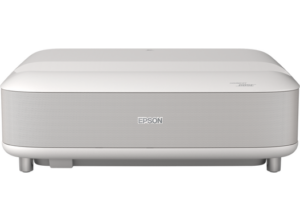
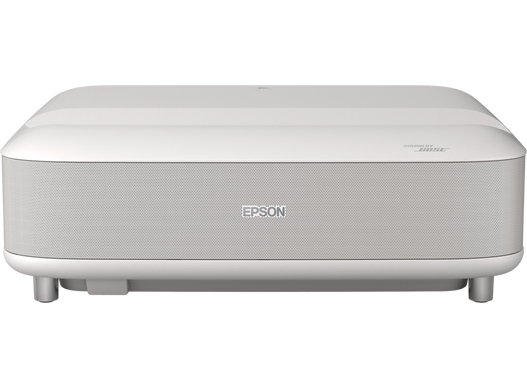
Epson Laser Projection TV, 3600 Ansi Lumens, 4k Pro UHD resolution, Bose, Google TV - EHLS670W
R52,843.46
EHLS670W Out of Stock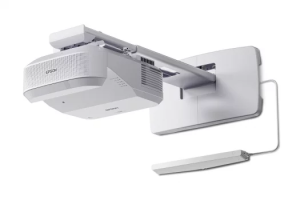
Epson
Epson Business Projector, 4200 Ansi Lumens, 4KE resolution, 16:9 Aspect Ratio - EB780E
R55,290.75
EB780E Out of Stock
Hisense
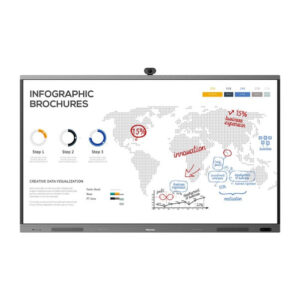
Hisense Interactive Flat Panel ,65", UHD resolution, Android 8.0 - 65WR6BE
R34,302.26
65WR6BE Out of Stock
Epson
Reviews
There are no reviews yet.