All Categories
- ATEN
- EPSON
- HISENSE
-
AV Signal Distribution
In AV Signal Distribution
- JK
-
Screens
In Screens
-
Projector
-
Cables
In Cables
- DTECH
- Business
- VISION
-
Projector Bracket
In Projector Bracket
-
Digital Signage Solutions
In Digital Signage Solutions
Brands
-
Audio
In Audio














All Categories
- ATEN
- EPSON
- HISENSE
-
AV Signal Distribution
In AV Signal Distribution
- JK
-
Screens
In Screens
-
Projector
-
Cables
In Cables
- DTECH
- Business
- VISION
-
Projector Bracket
In Projector Bracket
-
Digital Signage Solutions
In Digital Signage Solutions
Brands
-
Audio
In Audio

BROWSE CATEGORIES
Help
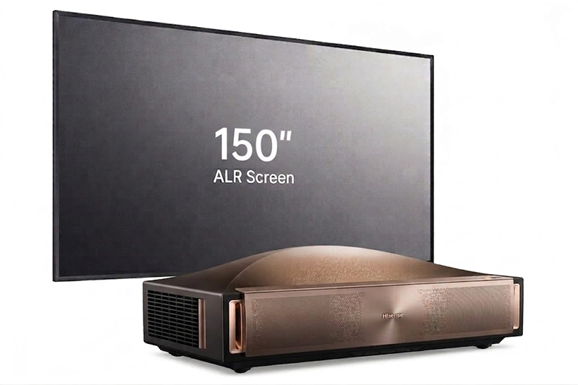
ALR
Hisense Laser Projection TV, 5000 Ansi Lumens, 4K resolution, UST, Incl 150″ ALR – 150L9Q
R143,619.63
The Hisense L9Q laser TV with a 150" ALR screen, for home cinemas and large rooms with a high ceiling and about 3.4 m of clear wall.
- 150" (381 cm) picture, 3,320 x 1,867 mm
- Back of console 336 mm from the wall
- Top of screen about 2.4 m above the console's surface
- Aligned by hand: Hisense's automatic screen fit stops at 120"
- Brand :Hisense
- SKU :HISENSE-150L9Q
- Category :ALR
- Availability :Out of Stock
Out of stock
The 150L9Q is the largest of the L9Q sets: Hisense’s triple-laser L9Q console with a 150″ (381 cm) ALR screen. The picture is 3,320 mm wide and 1,867 mm tall, with the back of the console 336 mm from the wall. Ceiling height decides whether it fits, because the top of the screen ends up about 2.4 m above whatever the console stands on.
Two things change at this size: the 5,000 ANSI lumens are spread over more than twice the area of a 100″ screen, and Hisense’s automatic screen fit does not cover it.
Ceiling height, wall width and cabinet depth
Hisense’s chart sets the bottom edge of a 150″ screen 494 mm above the console’s surface. Add the 1,867 mm picture and a 20 mm border top and bottom, and the top edge is about 2.40 m above that surface: 2.80 m from the floor on a 400 mm unit, or about 2.60 m on a 200 mm plinth. Even with the console on the floor, a 2.4 m ceiling leaves no room for this screen.
Across the wall, the screen needs about 3.36 m, the picture plus two 20 mm borders. Front to back, the 336 mm gap plus the console’s 317 mm depth calls for a top at least 653 mm deep if the unit backs onto the wall.
The set’s screen is described only by its size and ALR surface; its make, frame width and depth are not given. Every measurement here therefore uses the 20 mm border and 30 mm depth that Hisense’s chart is calculated with, within the chart’s 5% tolerance, and a wider frame would raise the top edge further. Where the ceiling is lower, the Hisense 120L9Q tops out about 1.94 m above the console, and the L9Q console on its own suits a screen you choose yourself.
Brightness spread over 6.2 square metres
A 150″ picture covers about 6.2 m², against 2.76 m² at 100″, so on screens of equal gain each square metre receives 44% of the light that reaches the 100L9Q’s screen: around 800 lumens per square metre from the L9Q’s 5,000 ANSI lumens. An ALR surface rejects much of the room’s own light, but at this size dimmed lamps and covered windows count for more than on the smaller sets.
The colour and contrast figures do not change with screen size: 110% of BT.2020, a 5,000:1 static contrast ratio, and Dolby Vision, HDR10+, HDR10 and HLG on a 3840 x 2160 picture.
Aligning a 150 inch picture by hand
Hisense limits automatic screen fit to 100″ and 120″ screens, so the 150L9Q is set up manually. Level the screen first, connect all cables to the console, then place it parallel to the screen. Square the picture with the adjustable feet: raise both front feet when the top of the image is wider than the screen, both rear feet when the bottom is wider, and the front and back feet on one side, turning the console slightly, when the top edge slopes.
With no zoom or lens shift, sliding the console away from the wall enlarges the picture until it covers the frame. Manual keystone correction then moves four corner points, or eight when the middle of the picture bulges or dips. Focus is motorised, under Laser Settings.
Sound and connections for a large room
The console’s ten drivers deliver 116 W as a 6.2.2 system with Dolby Atmos and DTS:X, all within a 624 mm wide console under a 3.3 m screen. For front speakers spread across that width, connect an AV receiver to HDMI 3, the eARC port. Games consoles go on the two HDMI 2.1 ports, which support ALLM. On the international model the operating system is Hisense’s VIDAA, with satellite and terrestrial tuner inputs.
150L9Q compared with the 150PX4PRO
The Hisense 150PX4PRO pairs a 150″ screen with the PX4 Pro. At this size the brightness gap is the main difference: Hisense rates the L9Q at 5,000 ANSI lumens and the PX4 Pro at up to 3,500, so the L9Q puts about 43% more light on a screen of the same size and gain. The L9Q’s 0.18 throw ratio, against 0.2, also keeps its console nearer the wall. The PX4 Pro answers with 118% of BT.2020 and VRR to 240 Hz at 1080p, by Hisense’s US and Canadian figures, and weighs 8.3 kg to the L9Q’s 12.9 kg. Contrast is harder to call: the PX4 Pro’s 6,500:1 relies on its iris, while 5,000:1 is a static figure for the L9Q.
Key specifications of the 150L9Q
| In the set | L9Q console with 150″ ALR screen |
|---|---|
| Picture dimensions | 3,320 x 1,867 mm, about 6.2 m² |
| Back of console to wall | 336 mm |
| Screen bottom over console surface | 494 mm |
| Screen top over console surface | About 2.40 m (calculated with a 20 mm border) |
| Alignment | Manual 4-point or 8-point; no auto screen fit at 150″ |
| ANSI brightness | 5,000 lumens |
| Colour range | 110% BT.2020 |
| Power | 350 W rated; 120 to 240 V (international model) |
| Sound system | 6.2.2, 116 W, Dolby Atmos, DTS:X |
Questions about the 150L9Q set
Is 5,000 lumens enough for a 150-inch screen?
In a room where you can control daylight, yes. Hisense rates the console to 200″ and lists 150″ among the ALR screen sizes for the L9Q. Each square metre gets less than half the light of the 100″ set, though, so window light costs more contrast at this size than on the smaller screens.
Can I lower the 150-inch screen to suit my ceiling?
Only by lowering the console with it. The L9Q has no lens shift, so the screen’s lower edge always sits about 494 mm higher than the top of the unit holding the console; a lower unit or plinth is the only way to bring the whole screen down.
Will the 150L9Q play video files from a USB drive?
Yes. Hisense lists MP4, MKV, MOV, TS, AVI, WMV and WebM files with HEVC (H.265), VP9 and H.264 video. Hisense caps USB 3.0 devices at 1 A and USB 2.0 devices at 500 mA, so it says to run a hard disk from its own mains adapter, and warns that a drive drawing 1 A or more at start-up can make the TV restart or lock.
Does the L9Q work with Control4 in a cinema room?
Yes. Hisense lists the L9Q as Control4 compatible on its European and US sheets, and the US sheet adds URC and TRI compatibility. For wired control, the European sheet lists an Ethernet port and no RS-232.
| Physical | Console Dimensions: 24.6” x 12.5” x 6.5” |
|---|---|
| Console Weight | 28.4 lb |
| Over box/Packaged Weight | 37.5 lbs |
| Projection Size | 80"-200" |
| Brightness | 5000 ANSI Lumen |
| Resolution / Refresh Rate | 4K@60Hz |
| Colour Space | 110% BT.2020 |
| Contrast Ratio | 5000:1 |
| Light Source | Red + Green + Blue Trichroma Laser |
| Laser Life | 25,000+ Hours |
| Throw Ratio | 0.18:1 |
| Chipset | 0.47" DMD |
| Screen Size | 80"-200" |
| Resolution | 4K |
| Mounting Brackets | Yes |
| Install Manual | Yes |
| Gloves | Yes |
| Smart TV Platform | Google TV(Google Certified) |
| App Store | Google Play Store |
| Audio Output Power | 116W |
| DTS | X |
| Connectivity | Wi-Fi: |
| Bluetooth | Yes |
| Wired Ethernet | Yes |
| Noise Reduction | Yes |
| Parental Controls | Yes |
| Closed Caption | Yes |
| Sleep Timer | Yes |
| Eye Safety | Yes |
| MEMC | Yes |
| Remote Finder | Yes |
| Remote | Yes, Voice remote with backlight |
| Power Cable | Yes |
| Cleaning Kit | Yes |
| Ports | HDMI: |
| Analog Audio Output | 1 x |
| Power Supply | AC 120V, 60Hz |
| Power Consumption | 350W |
| Warranty | 2 Years limited Warranty |
| UPC/EAN | UPC: 888143023823 |
| EAN | 6942351422992 |
You must be logged in to post a review.
You may also like these
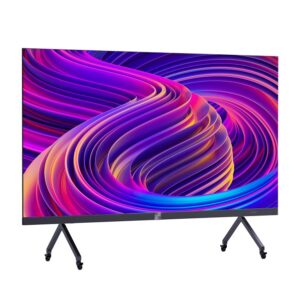
Hisense
Hisense AlI-In-One LED, 163", FHD 1920x1080P resolution, Android 14.0 OPS - HAIO163GE
R750,569.31
HAIO163GE Out of Stock
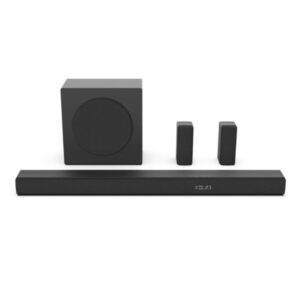
Hisense
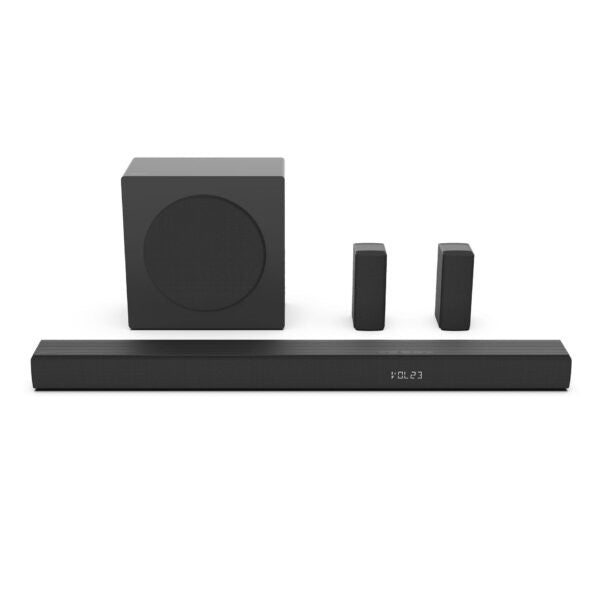
Hisense Sound Bar, Bluetooth, 540W 5.1 Channel with Wireless Subwoofer - HS5100
R3,812.83
HS5100 Out of Stock
Hisense
 In Stock
Hisense Digital Signage 32", 500 nits, Full HD, with 7day x 24hrs operation, Android 11 - 32DM66D
R8,996.51
32DM66D In Stock
Epson
Reviews
There are no reviews yet.