All Categories
- ATEN
- EPSON
- HISENSE
-
AV Signal Distribution
In AV Signal Distribution
- JK
-
Screens
In Screens
-
Projector
-
Cables
In Cables
- DTECH
- Business
- VISION
-
Projector Bracket
In Projector Bracket
-
Digital Signage Solutions
In Digital Signage Solutions
Brands
-
Audio
In Audio






All Categories
- ATEN
- EPSON
- HISENSE
-
AV Signal Distribution
In AV Signal Distribution
- JK
-
Screens
In Screens
-
Projector
-
Cables
In Cables
- DTECH
- Business
- VISION
-
Projector Bracket
In Projector Bracket
-
Digital Signage Solutions
In Digital Signage Solutions
Brands
-
Audio
In Audio

BROWSE CATEGORIES
Help
HISENSE
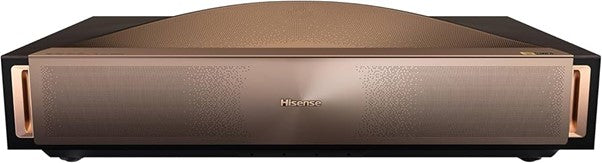
Hisense Laser Projection TV, 5000 Ansi Lumens, 4K resolution, UST – L9Q
R82,068.36
Ultra short throw 4K laser TV console for home cinemas and lounges, sold without a screen and placed 137 mm from the wall for a 100" picture.
- 5,000 ANSI lumens from red, green and blue lasers
- 80" to 200" picture from a 0.18:1 throw ratio
- 116 W of 6.2.2 sound tuned by Devialet, with Dolby Atmos
- Two HDMI 2.1 inputs with ALLM, eARC on HDMI 3
- Brand :Hisense
- SKU :HISENSE-L9Q
- Category :HISENSE
- Availability :
 In Stock
1 in stock
The Hisense L9Q is an ultra short throw laser TV: a 12.9 kg console that stands on a low cabinet and projects upwards onto a screen on the wall behind it. Hisense rates it for pictures from 80″ to 200″, and at 100″ (254 cm) the back of the console sits 137 mm from the wall.
Red, green and blue lasers give 5,000 ANSI lumens, and ten built-in drivers tuned by Devialet produce 116 W of 6.2.2 sound. This listing is the console alone, without a screen.
Brightness, colour and picture formats
Contrast is rated at 5,000:1 static. The three laser sources cover 110% of the BT.2020 colour range (145% of NTSC) in 10-bit colour, and are rated for 25,000 hours to half brightness, about 17 years at four hours a day.
The 3840 x 2160 picture comes from a 0.47″ DLP chip and accepts Dolby Vision, HDR10+, HDR10 and HLG. The L9Q also carries IMAX Enhanced, Filmmaker Mode and Pantone colour and SkinTone validation. For 3D you need DLP-Link glasses, sold separately.
Throw distance and placement by screen size
With no zoom or lens shift, the picture grows as the console moves away from the wall; focus is motorised. Hisense calculates its chart for its own screens (30 mm deep, with a 20 mm border) and accepts a 5% deviation from these positions:
| Screen | Picture, W x H (mm) | Console back to wall (mm) | Stand top to screen bottom (mm) |
|---|---|---|---|
| 80″ | 1,770 x 996 | 57 | 298 |
| 100″ | 2,215 x 1,245 | 137 | 354 |
| 120″ | 2,657 x 1,494 | 216 | 410 |
| 150″ | 3,320 x 1,867 | 336 | 494 |
| 200″ | 4,427 x 2,492 | 535 | 634 |
Add the console’s 317 mm depth for the cabinet top a wall-hugging unit needs: 454 mm at 100″, 533 mm at 120″ and 653 mm at 150″. Hisense’s setup guide asks for about 30 cm (12 in) clear on each side at the air vents and rules out enclosed or poorly ventilated spaces. The operating range is 5 to 35 °C, and fan noise rises from 29.5 dB or less at 26 °C to 40.5 dB at 35 °C.
Automatic screen fit (the console’s camera reads a test pattern and corrects the picture to the frame) works only on 100″ and 120″ screens, and Hisense advises its own ALR screen for it, as screen type strongly affects the outcome. Other sizes are aligned with the levelling feet and 4-point or 8-point manual correction. For ceiling mounting Hisense specifies a bracket it recommends, fitted by a professional with M6 bolts.
6.2.2 sound tuned by Devialet
The ten drivers are two pairs at 15 W, two pairs at 10 W and one pair at 8 W, 116 W in all. Hisense describes the layout as 6.2.2, with two woofers for bass and up-firing drivers for height, and the L9Q decodes Dolby Atmos and DTS:X. To pass the sound to an AV receiver or soundbar, use HDMI 3 (eARC) or the optical output; Hisense’s European sheet lists no analogue or headphone output.
Inputs, tuners and smart platform by region
Of the four HDMI inputs, ports 1 and 2 are HDMI 2.1 with ALLM and ports 3 and 4 are HDMI 2.0. USB 2.0, USB 3.0 and USB-C ports read storage, and the console has Ethernet, Wi-Fi 6E, Bluetooth, AirPlay 2 and Control4 compatibility.
The operating system and tuners depend on the regional version. Hisense’s sheets for Europe, the Middle East and Australia describe the international model: VIDAA (VIDAA U9 on the European and Australian sheets), one satellite input (DVB-S2/S), one terrestrial and cable input (DVB-T2/T/C) and a CI+ slot. Hisense South Africa’s L9Q page also shows VIDAA. The US model runs Google TV with an ATSC tuner instead.
How the L9Q compares with the PX4 Pro
The Hisense PX4 Pro is Hisense’s lighter triple-laser UST console, at 8.3 kg. On Hisense’s US and Canadian figures the L9Q gives more light (5,000 ANSI lumens to the PX4 Pro’s maximum of 3,500), sits nearer the wall (0.18 throw ratio against 0.2) and has more amplifier power (116 W against 66 W from six speakers). The PX4 Pro covers more colour, 118% of BT.2020 against 110%, and only the PX4 Pro gets 1080p VRR (48 to 240 Hz) and FreeSync Premium in Hisense’s lists. Its 6,500:1 contrast is quoted with the iris in use and the L9Q’s 5,000:1 is static, so those two do not compare directly.
Screens and cables for the L9Q
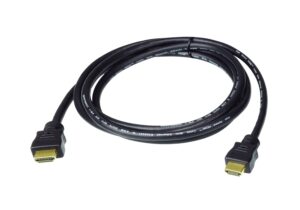
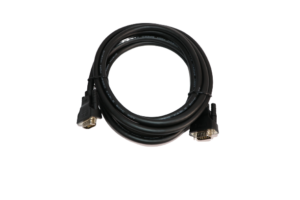
AV Supply also lists the console with a 100″, 120″ or 150″ ALR screen as the 100L9Q, 120L9Q and 150L9Q sets. If you buy the console alone, choose an ALR (ambient light rejecting) screen made for UST projection: ALR screens reflect light arriving from a set angle, and one built for a standard-throw projector turns away much of the L9Q’s output, leaving a dull picture. For a source on a shelf below the console, the Dtech H20402 is a 2 m HDMI 2.1 cable.
Key specifications of the Hisense L9Q
| Laser engine | Triple laser: red, green and blue |
|---|---|
| Brightness | 5,000 ANSI lumens |
| Contrast | 5,000:1 static |
| Colour gamut | 110% BT.2020 |
| Resolution | 3840 x 2160, 0.47″ DMD |
| Throw ratio | 0.18:1, no zoom or lens shift |
| Picture size | 80″ to 200″ |
| Audio | 116 W, 6.2.2 channels, Dolby Atmos and DTS:X |
| HDMI | Four: HDMI 2.1 on ports 1 and 2, HDMI 2.0 on 3 (eARC) and 4 |
| Smart platform | VIDAA on the international model; Google TV on the US model |
| Console | 624 x 317 x 166 mm, 12.9 kg |
| Power | 120 to 240 V on Hisense’s international sheets, 350 W rated |
Questions about the Hisense L9Q
Is a screen included with the L9Q?
No. Hisense’s setup guide states that the screen is not included. A light-coloured wall will take the picture, but Hisense’s throw chart and automatic screen fit are both set up around its own ALR screens.
Can I connect a laptop to the USB-C port?
Not for video. Hisense’s setup guide says the USB-C port reads a USB drive, or a USB 3.0 drive through a Type-C dock, and does not accept a DisplayPort signal. Use an HDMI input instead, with a USB-C to HDMI adapter if the laptop lacks an HDMI port.
Will a PS5 or Xbox Series X run at 4K 120 Hz on the L9Q?
No. The L9Q’s 4K input tops out at 60 Hz on Hisense’s sheets, and no VRR is listed. Use HDMI 1 or 2, the HDMI 2.1 pair, where ALLM lets the games console switch the L9Q into Game Mode; Hisense quotes 20 ms or less of lag in that mode, and 12 ms with a 2K signal at 120 Hz.
Will the L9Q run on South African mains power?
By Hisense’s ratings for the international model, yes. Its European, Middle East and Australian sheets give a 120 to 240 V input, and its setup guide adds 50 to 60 Hz, a range that includes South Africa’s 230 V, 50 Hz supply. Rated consumption is 350 W, and Hisense asks owners to switch off with the remote, not at the wall.
| Physical | Console Dimensions: 24.6” x 12.5” x 6.5” |
|---|---|
| Console Weight | 28.4 lb |
| Over box/Packaged Weight | 37.5 lbs |
| Projection Size | 80"-200" |
| Brightness | 5000 ANSI Lumen |
| Resolution / Refresh Rate | 4K@60Hz |
| Colour Space | 110% BT.2020 |
| Contrast Ratio | 5000:1 |
| Light Source | Red + Green + Blue Trichroma Laser |
| Laser Life | 25,000+ Hours |
| Throw Ratio | 0.18:1 |
| Chipset | 0.47" DMD |
| Screen Size | 80"-200" |
| Resolution | 4K |
| Mounting Brackets | Yes |
| Install Manual | Yes |
| Gloves | Yes |
| Smart TV Platform | Google TV(Google Certified) |
| App Store | Google Play Store |
| Audio Output Power | 116W |
| DTS | X |
| Connectivity | Wi-Fi: |
| Bluetooth | Yes |
| Wired Ethernet | Yes |
| Noise Reduction | Yes |
| Parental Controls | Yes |
| Closed Caption | Yes |
| Sleep Timer | Yes |
| Eye Safety | Yes |
| MEMC | Yes |
| Remote Finder | Yes |
| Remote | Yes, Voice remote with backlight |
| Power Cable | Yes |
| Cleaning Kit | Yes |
| Ports | HDMI: |
| Analog Audio Output | 1 x |
| Power Supply | AC 120V, 60Hz |
| Power Consumption | 350W |
| Warranty | 2 Years limited Warranty |
| UPC/EAN | UPC: 888143023823 |
| EAN | 6942351422992 |
You must be logged in to post a review.
You may also like these

Hisense
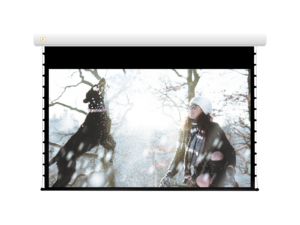
Hisense Ambient Light Rejection Frame Screen, 150", 16:9 Aspect Ratio - DLT150B
R69,484.80
DLT150B Out of Stock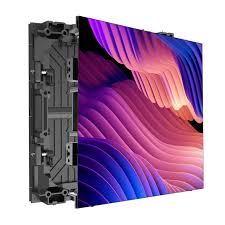

Hisense
Low stock (1 left)
Hisense Ambient Light Rejection Frame Screen, 120", 16:9 Aspect Ratio - DLT120C
R23,160.91
DLT120C Low stock (1 left)
Epson
Low stock (2 left)
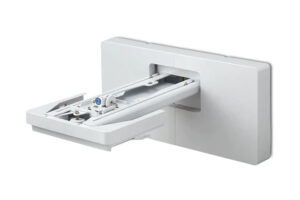
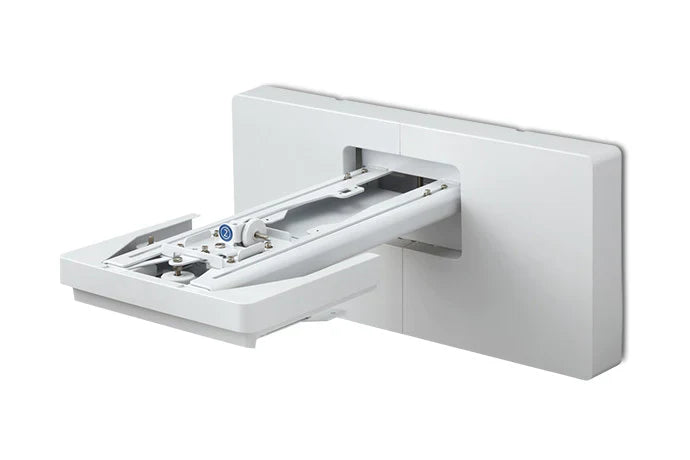
Epson Ultra Short Throw Wall Mount Projector Bracket - ELPMB62
R4,443.96
ELPMB62 Low stock (2 left)


Reviews
There are no reviews yet.