All Categories
- ATEN
- EPSON
- HISENSE
-
AV Signal Distribution
In AV Signal Distribution
- JK
-
Screens
In Screens
-
Projector
-
Cables
In Cables
- DTECH
- Business
- VISION
-
Projector Bracket
In Projector Bracket
-
Digital Signage Solutions
In Digital Signage Solutions
Brands
-
Audio
In Audio














All Categories
- ATEN
- EPSON
- HISENSE
-
AV Signal Distribution
In AV Signal Distribution
- JK
-
Screens
In Screens
-
Projector
-
Cables
In Cables
- DTECH
- Business
- VISION
-
Projector Bracket
In Projector Bracket
-
Digital Signage Solutions
In Digital Signage Solutions
Brands
-
Audio
In Audio

BROWSE CATEGORIES
Help
Education Solutions
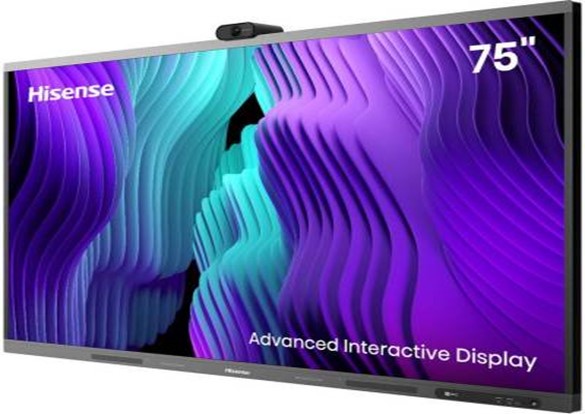
Hisense Interactive Panel, 75″, 4k resolution, 400 nits, Android 13.0 – 75WM6FE
R56,085.29
The 75-inch GoBoard Live Pro, a 4K touch display that carries its own camera, microphone array and Android system certified by Google, sized between Hisense's 65 and 86-inch panels.
- 4K (3840 x 2160), 60 Hz; brightness 400 nits typical
- Infrared touch, 55 points under Android or OPS
- 50 MP 4K camera; 8 microphones reaching 12 m
- 45.8 kg; VESA 600 x 600 mm; Hisense bracket included
- Brand :Hisense
- SKU :HISENSE-75WM6FE
- Category :Education Solutions
- Availability :
 In Stock
1 in stock
The Hisense 75WM6FE is the 75-inch GoBoard Live Pro interactive display: a 4K touch screen with a camera, an eight-microphone array, speakers and a Google-certified Android 13 system all built into the frame. At 1709.9 mm wide and 45.8 kg it sits between the 65 and 86-inch versions, and its 600 x 600 mm VESA holes take the bracket Hisense packs with it.
Size, weight and fixing the 75WM6FE
The panel is 1709.9 x 1060.1 x 125.9 mm overall, and the 16:9 picture inside it is roughly 166 cm wide and 93 cm high. It weighs 45.8 kg on its own and 60.0 kg packed, in a carton of 1850 x 1165 x 240 mm.
The rear has a 600 x 600 mm VESA pattern for four M8 screws, and a Hisense wall bracket comes in the box. Rate the wall fixing for at least the panel’s 45.8 kg plus the bracket, which Hisense does not weigh. Where one panel serves several rooms, Hisense lists the 75-inch WM6FE among the displays that fit its WH3315 mobile stand. Its datasheet puts the load limit at 100 kg and the largest VESA pattern at 1,000 x 600 mm; it has three heights and lockable wheels.
If the room calls for a different size, compare the Hisense 65WM6FE (35.0 kg, VESA 600 x 400 mm) and the Hisense 86WM6FE (59.0 kg, VESA 1000 x 600 mm).
Picture quality and the touch surface
The 3840 x 2160 panel refreshes at 60 Hz; its D-LED backlight gives 400 nits typical brightness against a typical contrast of 1200:1. It shows 1.07 billion colours (10-bit) covering 72% of NTSC, with an 8 ms response time and 178° viewing angles both ways. Hisense rates the panel for at least 50,000 hours, and TÜV Rheinland certifies it for reduced blue light.
Touch comes from an infrared frame under anti-glare, 9H scratch-resistant glass. Android and a Windows OPS computer each get up to 55 simultaneous touch points, enough for several pupils to write on the board together. Writing height is 1.5 mm or less, typical touch response 6 ms and the minimum touch object 2 mm, and the whiteboard app converts handwriting into typed text.
Calls without a PC: camera, microphones and speakers
A 50 MP camera on the top edge records in 4K and has a physical cover and an indicator light that shows when it is working. It sees 80.2° horizontally and 51° vertically. Eight microphones listen across 180° in front of the panel to a distance of 12 m. The array runs AEC, ANS and AGC processing (echo cancelling, noise suppression and level control), adds AI noise reduction and can track who is speaking.
Speaker output adds up to 61 W from 18 W, 18 W and 25 W units, with Dolby Atmos. Meetings can use Google Meet or other Android apps; calling software that only runs on Windows needs a computer connected to the panel.
Google apps and sharing to the screen
Google’s EDLA certification means the Play Store, Chrome, Meet, Classroom, Drive and Google’s other apps come installed and work with a Google account login. Hisense fits an octa-core processor (4 x A73 at 2.2 GHz plus 4 x A53 at 2.0 GHz), Mali-G52 graphics, 128 GB of storage and 8 GB RAM, and units leave the factory on Android 13.0.
Hisense’s datasheet rates the panel for up to nine devices casting at once, by five methods, with sessions lasting eight hours unbroken. A laptop without casting software can use Hisense’s HT008E USB-C screen-sharing dongle, which names the WM6FE series in its compatible models and carries 4K at 30 Hz.
Inputs, control and power
Wired sources connect through three HDMI 2.0 inputs, and there is one HDMI output. A USB-C port charges a laptop at up to 65 W. USB comes as three 3.0 ports, a single 2.0 port and a touch connection for an external computer, alongside audio in, audio out and a coaxial digital output. For the network and room control there is Gigabit LAN and RS-232 in and out on RJ45 jacks. Wireless covers dual Wi-Fi (802.11ax and 802.11ac), Bluetooth 5.3 and NFC.
Power is 100 to 240 V AC. Without an OPS module the panel draws 213.2 W typically and 350 W at most, and less than 0.5 W in standby. Plan the circuit on the 350 W figure, not the typical one.
Key specifications of the 75WM6FE
| Screen size | 75″ (190.5 cm) |
|---|---|
| Pixels | 4K UHD, 3840 x 2160, refreshed at 60 Hz |
| Net weight | 45.8 kg (60.0 kg packed) |
| Brightness | 400 nits typical |
| Wall mounting | VESA 600 x 600 mm, M8 screws; bracket included |
| Touch | Infrared frame, 55 points (Android and OPS) |
| Width, height, depth | 1709.9, 1060.1 and 125.9 mm |
| Camera | 50 MP, 4K, 80.2° x 51° field of view |
| Power draw | 213.2 W typical, 350 W max (without OPS) |
| Microphone array | 8 mics, 180°, 12 m pickup |
| Android | 13.0 as shipped; Hisense lists an Android 16 OTA |
| HDMI | Three 2.0 inputs, one output |
Questions about the Hisense 75WM6FE
Does the 75WM6FE need an OPS computer?
Not for Android work: whiteboarding, browsing, Google apps and calls in Android apps run on the panel’s own processor. An OPS PC is for rooms that need Windows software on the board. The bay supplies 18 V at 5 A, but Hisense’s OPS72D, OPS72E and OPS727 pages list the 75WM6FE-A and not the 75WM6FE, so check that a module suits this panel before ordering.
Will the 75WM6FE get Android 16?
Hisense says so: its 75WM6FE page lists Android 16 as an OTA upgrade with an August 2026 start date. Panels leave the factory on Android 13.0. Whether the update has gone out is not stated there, so look for it in the system settings once the panel is online.
Is the 75WM6FE the same as the 75WM6FE-A?
On paper, almost. Hisense’s product pages give the two the same panel, touch, camera, Android 13 system with the Android 16 note, ports and 45.8 kg weight. Its documents differ in two places: the February 2026 -A datasheet lists HDMI 2.1 inputs where the product pages say 2.0, and the OPS modules are listed for the -A only. AV Supply also sells the Hisense 75WM6FE-A.
Can a laptop show its screen through the USB-C port?
Hisense does not say so. Its specifications describe the USB-C port only as supporting 65 W Power Delivery, so it will charge a laptop, but video over that cable is unconfirmed. Use one of the three HDMI inputs for the picture, and connect the USB touch port as well if you want to control the laptop from the screen.
Interactive Display panel
| LCD Size | 75" |
|---|---|
| Backlight Type | D-LED |
| Resolution | 3840 x 2160 (Pixels) |
| Brightness | 400nits(typ.) |
| Contrast Ratio | 1200:1(typ.) |
| Response Time | 8ms(typ.) |
| Refreshing Frequency | 60Hz |
| Viewing Angle | 178°(H) / 178°(V) |
| Lifetime | 50,000 hrs (min.) |
| Colour Gamut (X% NTSC) | 72% |
| Display Colours | 1.07B(10bit) |
System
| CPU | Architecture - A73x4 + A53x4 Octa-core // Working Frequency - 2.2GHz + 2.0GHz |
|---|---|
| GPU | MaliG52 |
| RAM | 8GB |
| ROM | 128GB |
| Operating System | Android 13.0 |
| Language | English (default), Chinese, French, Spanish, German, Italian, Polish, Finnish, Norwegian, Swedish, Thai, Indonesian, Japanese, Russian, Arabic, Vietnamese, Serbian, Kazakh; Croatian, Slovenian, Czech, Slovak, Hungarian, Romanian, Bulgarian, Albanian, Macedonian, Greek, Turkish, Afrikaans, Malay |
Power
| Power Requirements | AC 100V ~ 240V, 50/60Hz |
|---|---|
| Power Consumption Without OPS | 350W (Max) / 213.2W (Typ.) |
Connectivity
| OPS Power | DC 18V/5A |
|---|---|
| Wi-Fi | IEEE 802.11a/b/g/n/ac/ax(2.4G and 5G) // IEEE 802.11a/b/g/n/ac(2.4G and 5G) |
| Bluetooth | BT5.3 |
| NFC | Yes |
| Camera | Yes |
Touch
| Sensing Type | Infrared Touch Frame |
|---|---|
| Surface Protection | Anti-Glare Glass |
Physical
| Product Size (W x H x D) | 1709.9 x 1060.1 x 125.9mm // 67.3 x 41.7 x 5.0 inch |
|---|---|
| Package Size (W x H x D) | 1850 x 1165 x 240mm // 72.8 x 45.9 x 9.4 inch |
| Net Weight | 45.8kg / 101.0lbs |
| Packed Weight | 60.0kg / 132.3lbs |
| Housing Material | Front Shell: Aluminium // Rear Shell: Plastic |
| Housing Colour | Black + Tarnish |
| VESA | 600 x 600mm, 4-M8 Screw |
Environment
| Operation Temperature | 0 - 40°C |
|---|---|
| Operation Humidity | 20% - 80% |
Certification
| Standard Certification | CB/CE/ERP/South Africa Energy Efficiency/cTUVus/CEC/UKCA/FCC/IC/RCM/Energy Star/EDLA |
|---|
You must be logged in to post a review.
You may also like these

Hisense
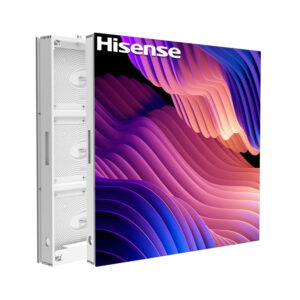
Hisense Ambient Light Rejection Frame Screen, 150", 16:9 Aspect Ratio - DLT150B
R69,484.80
DLT150B Out of Stock
Hisense
In Stock
Hisense Digital Signage 32", 500 nits, Full HD, with 7day x 24hrs operation, Android 11 - 32DM66D
R8,996.51
32DM66D In Stock
Hisense

Reviews
There are no reviews yet.