All Categories
- ATEN
- EPSON
- HISENSE
-
AV Signal Distribution
In AV Signal Distribution
- JK
-
Screens
In Screens
-
Projector
-
Cables
In Cables
- DTECH
- Business
- VISION
-
Projector Bracket
In Projector Bracket
-
Digital Signage Solutions
In Digital Signage Solutions
Brands
-
Audio
In Audio








All Categories
- ATEN
- EPSON
- HISENSE
-
AV Signal Distribution
In AV Signal Distribution
- JK
-
Screens
In Screens
-
Projector
-
Cables
In Cables
- DTECH
- Business
- VISION
-
Projector Bracket
In Projector Bracket
-
Digital Signage Solutions
In Digital Signage Solutions
Brands
-
Audio
In Audio

BROWSE CATEGORIES
Help
Amplifier
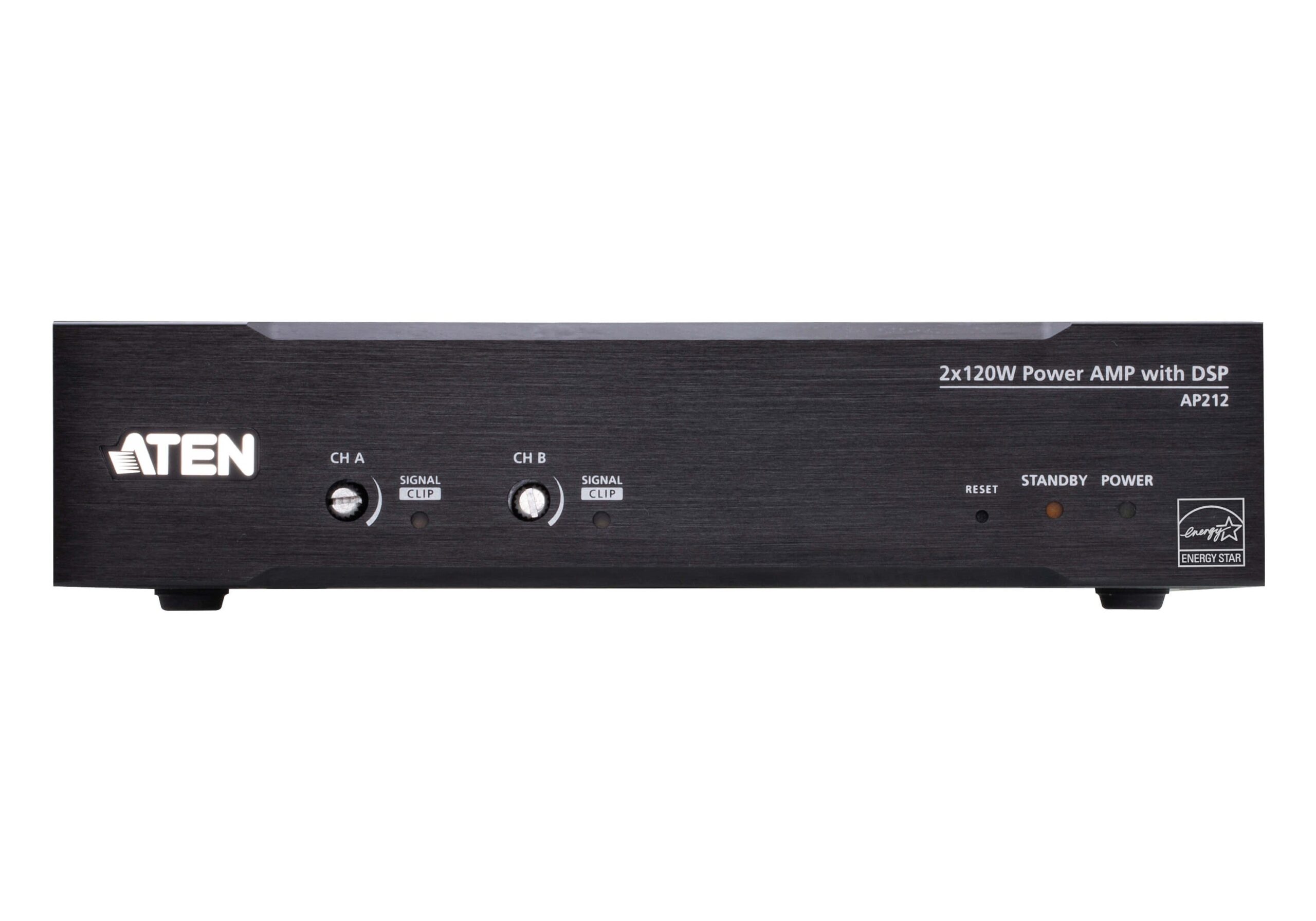
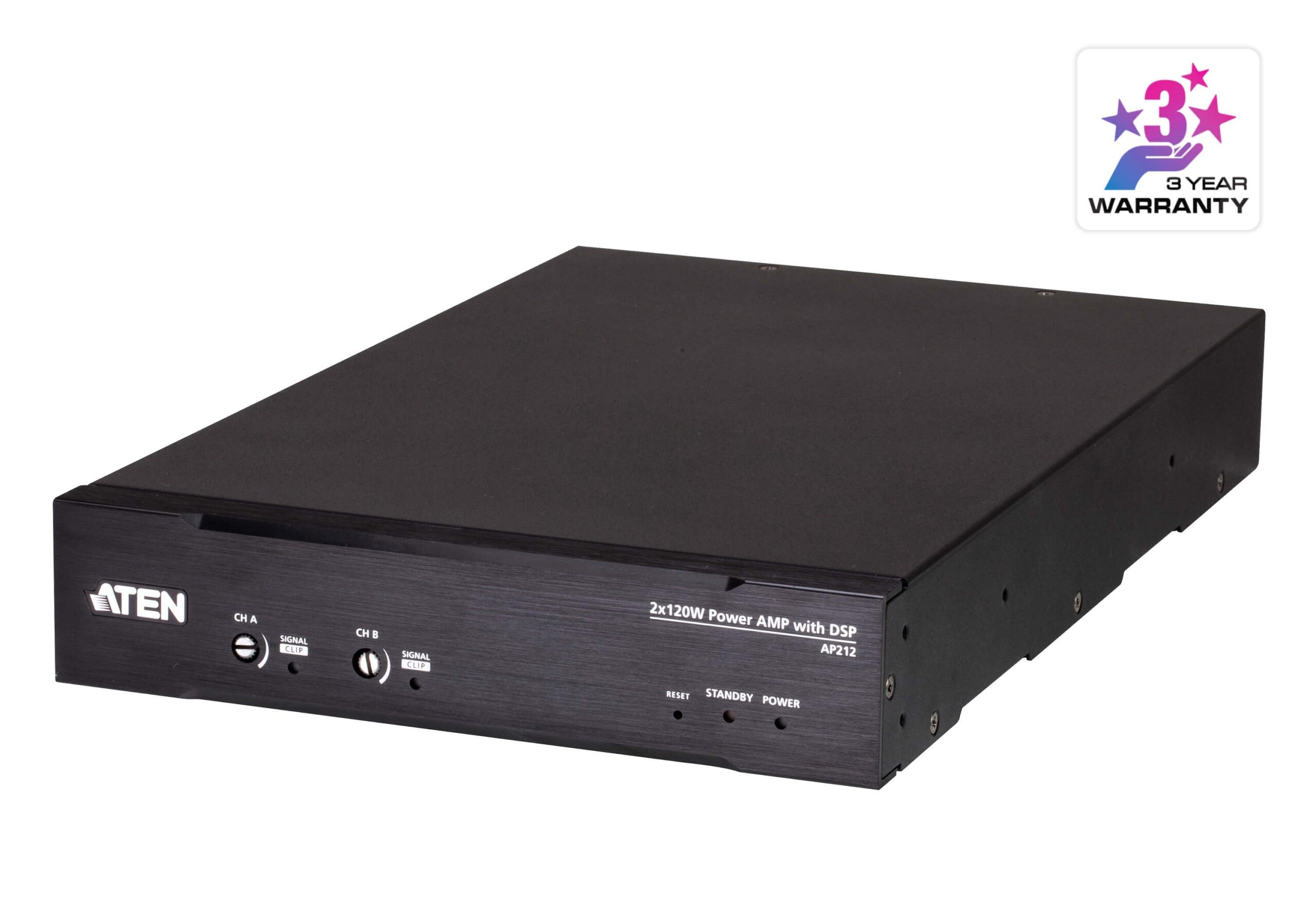
Aten Amplifier, 2 X 120W – AP212
R29,598.70
A two-channel Class D amplifier with built-in DSP for installers wiring a large 70 V or 100 V ceiling zone or a pair of 4 Ω loads.
- 120 W RMS per channel at 4 Ω, or 240 W RMS bridged at 70 V or 100 V
- Speaker presets, EQ, delay and limiter, set in a browser
- Slot for the AP901 Dante or AP902 mic/line card
- Fanless; rack and surface kit in the box
- Brand :Aten
- SKU :ATEN-AP212
- Category :Amplifier
- Availability :Out of Stock
Out of stock
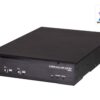
The Aten AP212 is a two-channel Class D amplifier with built-in DSP. It gives 120 W RMS per channel into 4 Ω, or one bridged 240 W RMS output on a 70 V or 100 V line, enough for 16 Aten AS106 ceiling speakers on 15 W taps. Its DSP is set over the network, and a rear slot takes a Dante or microphone card.
Output power on 4 Ω channels and on a 70 V or 100 V line
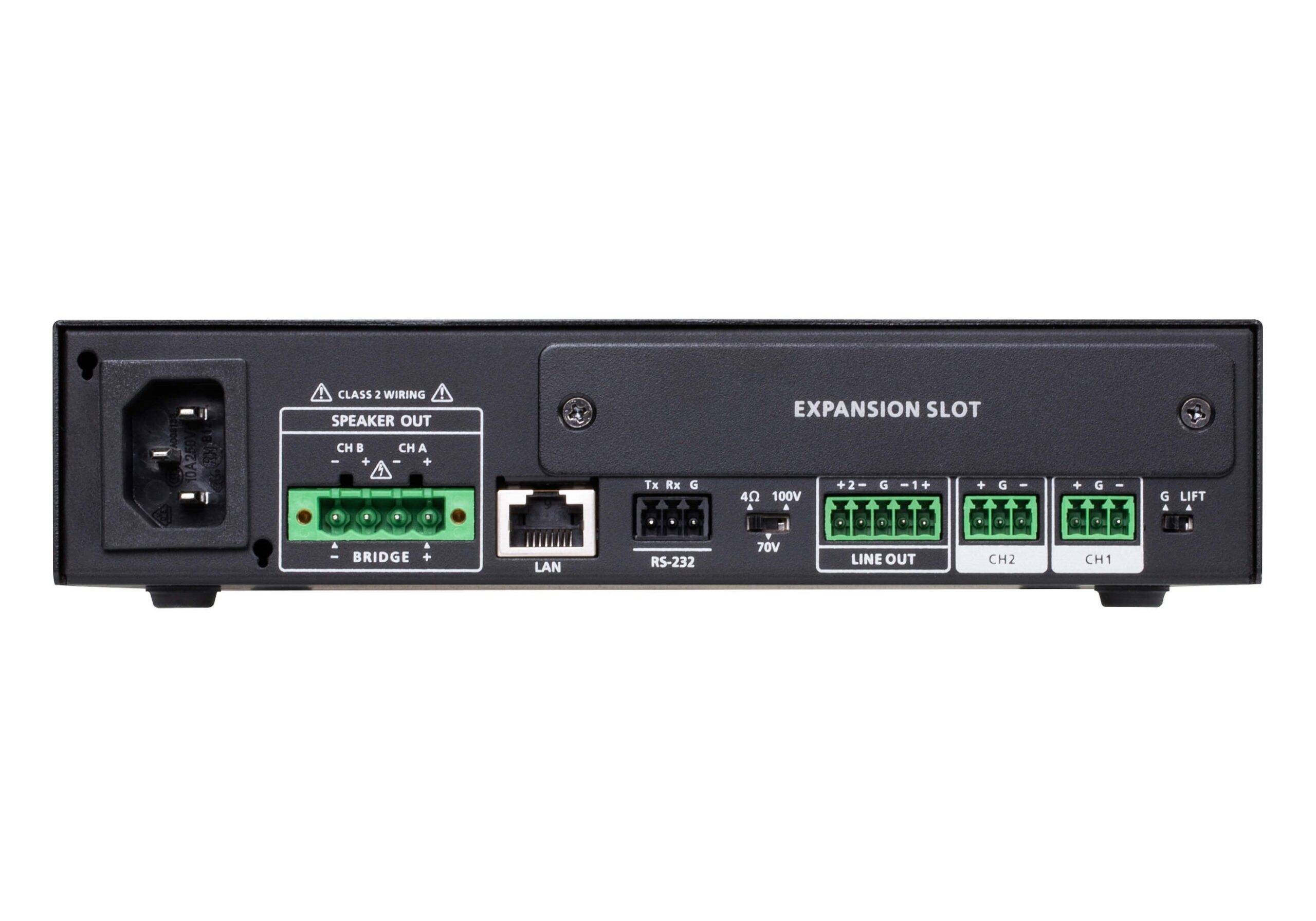
One rear switch sets the whole amplifier to 4 Ω, 70 V or 100 V. At 4 Ω the channels run separately at 120 W RMS (240 W peak) each, into one 4 Ω load or two 8 Ω speakers in parallel; Aten’s rule is that the load must not drop below 4 Ω, and it gives no power figure into 8 Ω.
At 70 V or 100 V the channels bridge across the outer pins of the 4-pin speaker connector for 240 W RMS (480 W peak). Aten rates that output at 20 Ω on 70 V and 40 Ω on 100 V, which in practice means the speakers’ taps must total 240 W or less.
How many Aten ceiling speakers one AP212 drives
Counts at the full rating, with no headroom held back:
| Speaker and setting | Per AP212 |
|---|---|
| AS106 on the 60 W tap | 4 |
| AS106 on the 30 W tap | 8 |
| AS106 on the 15 W tap | 16 |
| AS104 on the 20 W tap | 12 |
| AS104 on the 10 W tap | 24 |
| AS104 or AS106 at 8R, 4 Ω mode | 2 per channel |
Wired in parallel at 8R on one 4 Ω channel, two Aten AS104 4″ ceiling speakers could each take about 60 W at full volume, double their 30 W RMS rating, so cap that channel with the limiter. Two Aten AS106 6.5″ ceiling speakers at about 60 W each sit at their rating.
Tuning each output: presets, EQ, delay and limiter
Settings are made in a web browser (default address 192.168.0.60) or in Aten’s Audio Wizard for Windows and Mac. Each speaker channel mixes any of the inputs, the card’s included, then applies a preset for the Aten AS104, AS106 or AS108 (or a 150 Hz high-pass or 150/200 Hz low-pass filter), an adjustable high-pass filter and four EQ bands of up to ±20 dB, up to 100 ms of delay and a limiter. Twenty presets can be stored and exported to another unit.
Sources, subwoofer feed and the expansion card
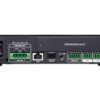
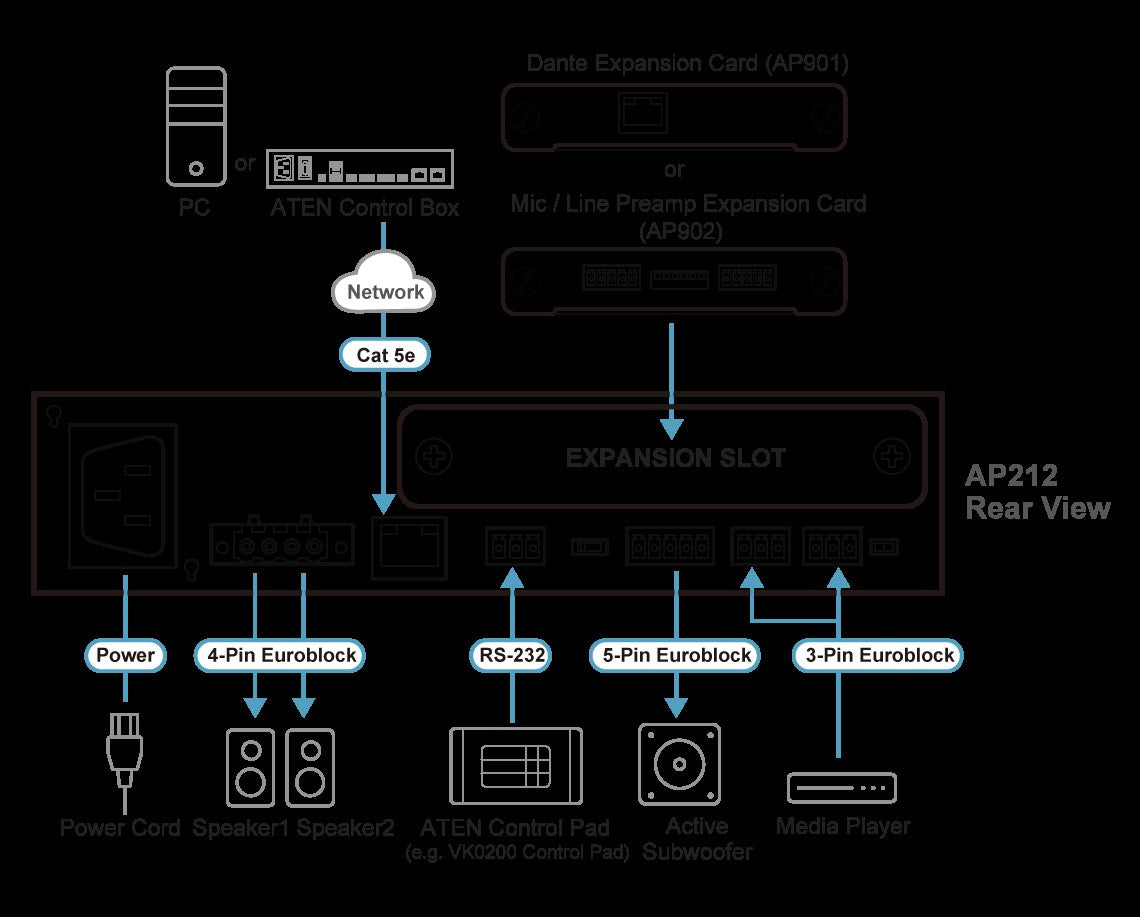
Two 3-pin Euroblock inputs take balanced (+4 dBu) or unbalanced (-10 dBV) line sources. The 5-pin line output feeds an active subwoofer or another amplifier, with its own delay and a 150 Hz or 200 Hz low-pass filter, and a ground-lift switch deals with mains hum. The rear slot holds one card, sold separately: the Aten AP901 Dante expansion card for two Dante receive channels, or the Aten AP902 mic/line preamp card for two microphone or line inputs.
Rack mounting and control systems
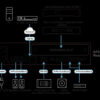
The 2.15 kg chassis has no fan and mutes if its heat sink overheats. The kit in the box mounts one unit in a 19-inch rack, joins two side by side across it, or fixes the amplifier to a desk. Aten’s VK control system connects over RS-232, for example a VK0200 control pad, or over the LAN through a control box such as the Aten VK2100A; the LAN port also accepts Telnet once enabled.
Key specifications of the Aten AP212
| Power, 4 Ω | 120 W RMS / 240 W peak per channel |
|---|---|
| Power, bridged at 70 V or 100 V | 240 W RMS / 480 W peak |
| Rated Hi-Z load | 20 Ω at 70 V, 40 Ω at 100 V |
| Frequency response | 50 Hz to 20 kHz, ±3 dB (4 Ω, 1 W) |
| Inputs | 2 x balanced or unbalanced line, 3-pin Euroblock |
| Outputs | 4-pin 5.08 mm speaker Euroblock; 5-pin line out |
| Control | Web interface and Telnet over LAN; RS-232 |
| Mains | 100 to 240 V, 50/60 Hz, 4 A with PFC |
| Size and weight | 20 x 32.3 x 4.4 cm, 2.15 kg |
Questions about the Aten AP212
Can the AP212 run 70 V speakers and a 4 Ω pair at the same time?
No. In 70 V or 100 V mode both channels become one bridged output, and the switch applies to the whole amplifier. A distributed ceiling line plus a separate low-impedance pair needs a second amplifier.
Does the AP212 have a microphone input?
Not as supplied: both built-in inputs are line level. The AP902 card adds two microphone or line inputs with gain from -6 to +36 dB, set by DIP switches on the card, or from the web interface when all of a channel’s switches are off.
Why is the AP212 silent straight after power-up?
It starts in network standby, and an input above -24 dBu or a login to the web interface wakes it. The optional auto standby also puts it to sleep after 10, 15 or 25 minutes below -40 or -50 dBu, so check that setting if it goes quiet in long pauses.
How is the AP212 different from the AP206?
Mostly in power. The Aten AP206 gives 60 W RMS per channel at 4 Ω and 120 W RMS bridged, with a Hi-Z rating of 40 Ω (70 V) and 80 Ω (100 V), and draws up to 2 A from the mains against 4 A. The chassis, weight, DSP, inputs and slot are the same.
System Specification
| Rated Power | 120Wrms / 240Wpeak per Channel @4Ω 240Wrms / 480Wpeak @70/100V Under Bridge Mode |
|---|---|
| Distortion | THD+N: |
| Frequency Response | 50~20kHz, +/-3dB @4Ω, 1W |
| Sensitivity | Balanced: +4dBu Unbalanced: -10dBV (0dBu=0.775Vrms, 0dBV=1Vrms) |
| Amplifier Type | Class D |
Audio Inputs
| Interfaces | 2 x 3-pin 3.5mm Euroblock (Bal/Unbal Line In) |
|---|---|
| Impedance | Balanced: 20kΩ / Unbalanced: 10kΩ |
| Detect Threshold | 50dBu |
Audio Outputs
| Interfaces | Line Output: 1 x 5-pin 3.5mm Euroblock Speaker Output: 1 x 4-pin 5.08mm Euroblock |
|---|---|
| Impedance | Lo-Z: 4Ω / Hi-Z: 70V (20Ω), 100V (40Ω) Line Output: 600Ω |
| Audio Effects | Built-In DSP |
| Protection | Output Shortcut AMP Output over/under voltage High Frequency Overload Thermal Protect |
Communication
| RS-232 | Connector: 3-pin, 3.5mm, Terminal Block Baud rate and protocol: Baud Rate: 19200, Data Bits: 8, Stop Bits:1, Parity: No, Flow Control: No |
|---|
Power
| Power Consumption | 100-240V~, 50/60Hz, 4A with PFC |
|---|
Compliance
| Certification | FCC, CE, UKCA |
|---|
Environmental
| Operating Temperature | 0~50℃ |
|---|---|
| Humidity | 0-80% RH, Non-Condensing |
| Storage Temperature | 20~60℃ |
Physical Properties
| Weight | 2.15 kg ( 4.74 lb ) |
|---|---|
| Housing | Metal |
| Dimensions (L x W x H) | 20.00 x 32.30 x 4.40 cm (7.87 x 12.72 x 1.73 in.) |
You must be logged in to post a review.
AP212 Datasheet PDF
 Low stock (2 left)
Reviews
There are no reviews yet.